The Ultimate Guide to OTT Data Management for Content Sellers

In this ultimate guide to OTT data management, you’ll find answers to:
- What is OTT data?
- What is OTT metadata?
- What is OTT metadata?
- What are the benefits of data sharing between OTT platforms and content sellers?
- How can content sellers leverage OTT data to drive content performance and operational efficiency?
- What OTT data management tools and technologies can help content sellers?
Introduction
Content sellers licensing video assets to Over-The-Top (OTT) video streaming providers typically receive monthly data with details on how their content is performing, how much revenue they’ve earned, and how much they’ve been paid by each distributor.
When managed and analyzed effectively, OTT data can deliver immense and immediate value for content sellers. Content sellers can leverage OTT data to measure the value of their video content, forecast future demand and revenue for specific video assets, track content performance across OTT distribution channels, assess distributor compliance with licensing agreements, and optimize their content production, marketing, and distribution strategies.
In this ultimate guide to OTT data management, you’ll find answers to:
- What is OTT data?
- What is OTT metadata?
- What is OTT metadata?
- What are the benefits of data sharing between OTT platforms and content sellers?
- How can content sellers leverage OTT data to drive content performance and operational efficiency?
- What OTT data management tools and technologies can help content sellers?
What is OTT data?
OTT data refers to the data that OTT streaming service providers like Netflix, Disney, and Amazon generate from their video streaming platforms.
These service providers use this data to enhance the user experience and optimize revenue generation on their video streaming platforms, but some data is also shared with content sellers as a means of reporting on content performance, revenue generation, and payments with respect to licensed video assets.
In the next section, you’ll discover four different types of OTT data that content sellers may encounter in the reports they receive from OTT streaming services.

Four types of OTT data you’ll encounter
Content metadata
Metadata is defined as “data that provides information about other data.” Content metadata, by extension, is data that provides information about a specific piece of video content.
OTT streaming providers often apply their own metadata to licensed video assets as a means of identifying and categorizing video content on their platforms, tracking content ownership and associated legal rights, and enhancing content discoverability to maximize the revenue potential of each video asset.
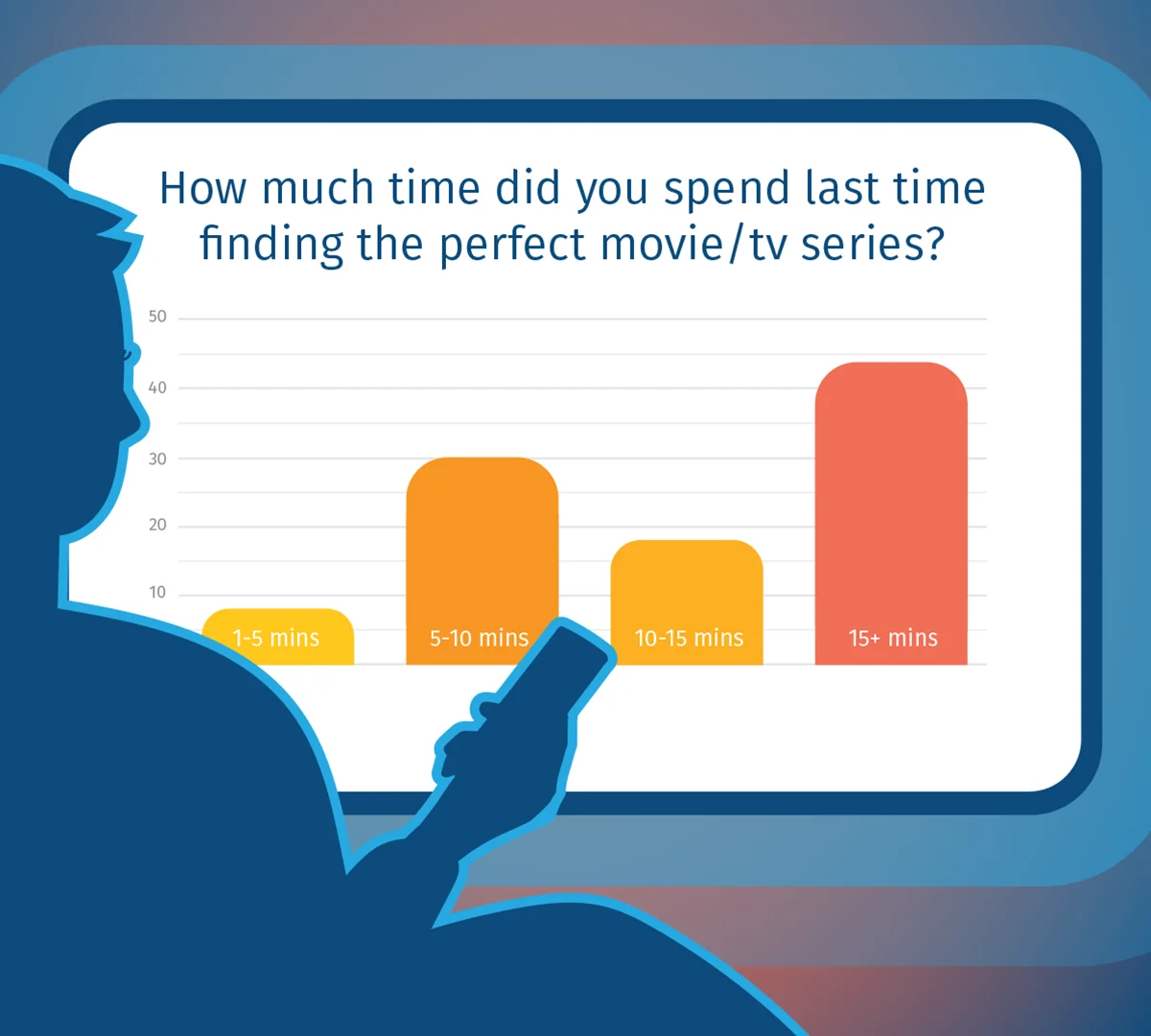
Image source User experience suffers when audiences spend too much time searching for desirable content on OTT services. Content metadata helps enhance discoverability and boosts audience engagement by reducing time spent searching for content.
There are four main types of content metadata that may be attached to video assets:
1) Descriptive metadata conveys information that identifies or characterizes a video asset, such as its title, category, genre, language, production company, names of cast and crew, and maturity rating. 2) Structural metadata conveys information about how a video asset is organized, such as whether the asset is an episode in a television series and if it is divided into chapters. 3) Administrative metadata conveys technical information about how to manage a video asset, including things like the file type, dimensions, color codes, and running time. 4) Legal metadata conveys information on the ownership and licensing status of a piece of video content.
Content performance data
Content performance data conveys information about how much or how frequently a video asset was streamed on an OTT platform for a given time period.
The performance data shared with content sellers varies widely between OTT streaming companies and also depends on the company’s OTT content monetization strategy, distribution model, and specifics of the licensing agreement. OTT streaming companies may provide data on the number of times each video asset was streamed, total minutes streamed for each video asset, number of rental/purchase transactions for each video asset, or the total number of advertisement views generated by the content.
Earnings and payments data
OTT streaming providers report to content sellers on the earnings they generate via their licensed content. Earnings are calculated differently depending on the distribution model and the details of the content licensing agreement:
- For subscription-based video-on-demand (SVOD) distribution, earnings are often calculated based on an agreed rate per minute of content streamed.
- For advertising video-on-demand (AVOD) or free ad-supported streaming TV (FAST) distribution, earnings are typically calculated as a share of advertising revenue generated by the content.
- For transactional video-on-demand (TVOD) distribution, earnings are calculated as a share of download-to-rent (DTR) and electronic sell-through (EST) revenue generated by the content.
OTT streaming providers pay out earnings to content sellers on a monthly basis, typically 30-90 days after the revenue was actually earned. Payment data indicates which payments have been issued, along with other details like tax withholding amounts, adjustments, and net earnings to-date.
User behavior data

OTT streaming providers capture a wide range of user behavior data to understand how audiences interact with content on their platforms. User behavior data conveys information about viewer retention and drop-off rates, as well as user preferences, watchlists, ratings, and search history. Streaming providers also capture demographic information about their audiences, such as age, gender, and geographic location. User behavior analytics is clearly valuable to content sellers who want deeper insights into how audiences are engaging with their content, but OTT video streaming companies don’t always share this data unless content sellers can negotiate for it as part of their licensing agreement.
Who can access OTT platform data?
The most comprehensive OTT data is available exclusively to the OTT video streaming service providers who own the platforms where audiences consume video content. OTT service providers use this data to analyze and improve the platform’s performance, drive user engagement, recommend relevant content to users, and maximize subscriber retention.
OTT streaming providers share some of their data with content sellers, typically as a means of reporting on content performance, earnings, and payments. Content sellers may be able to negotiate additional access to OTT platform data as part of a content licensing agreement.
The benefits of sharing OTT data
Both OTT streaming providers and content sellers benefit from increased OTT data sharing since they have a shared interest in developing and distributing video content that drives audience engagement and retention.
When OTT platforms share more data, content sellers get the opportunity to better understand audience preferences and viewing patterns. From there, content sellers can adjust their content creation strategies to create compelling content and drive revenue for themselves and their OTT distribution partners.
Four steps to managing your OTT data
OTT data contains valuable insights about the performance and value of video assets for content sellers. However, extracting those insights from the data can be complex and time-consuming for content sellers without the right tools and technologies.
In this section, we’ll explore four key tasks that content sellers must undertake to leverage their OTT platform data into measurable increases in revenue and operational efficiency.
Data ingest
The first step to managing OTT platform data for content sellers is to aggregate and ingest the data into a single database. Content sellers typically receive OTT data as a monthly report from each distributor partner.
OTT data reports come in a variety of formats (e.g. PDF, Microsoft Excel, etc.) and data entry teams are often required to manually enter the OTT data into a system of record. This process can be time-consuming and error-prone, especially for content sellers who distribute video assets across numerous OTT services.
Data normalization
After ingesting OTT data into a centralized database, the next challenge for content sellers is data normalization: the process of applying a standardized format, syntax, and data labels so that data from various OTT platforms appears similar across all fields and records. Applying a standardized format and syntax is a necessary step to enabling data analytics on OTT platform data. Normalizing OTT data is a significant challenge for content sellers today, primarily because the reports they receive from OTT distributors are highly non-standardized. Not only is OTT data reported in a variety of non-standard formats, we also see significant variation in terms of which data is reported and how the data is labeled.

Image Source These sample TVOD reports illustrate differences in data fields and labeling between OTT distributors.
Many content sellers are still normalizing OTT data manually, but the most data-driven content sellers use software programs like Revedia Digital to save time and reduce errors by automating the data normalization process.
Data analysis
Once OTT data has been normalized and centralized in a single source of truth, content sellers can analyze the data to answer questions like:
- On which platform does each video asset generate the most revenue or audience engagement?
- Which platforms deliver the best revenue or engagement performance for specific types of content?
- What is the value of a given video asset?
- What is the value of my entire content library?
- Which types or genres of content drive the most revenue or audience engagement?
- How much revenue is my content generating and how much overall cash flow should I expect in the next 30, 60, or 90 days?
As with data normalization, some content sellers are analyzing their OTT data using manual processes to answer these questions, while the most data-driven content sellers are leveraging modern, AI-driven data intelligence tools to streamline the process of extracting insights from OTT data.
Optimizing content creation, marketing, and distribution

Equipped with fresh insights from analyzing their OTT data, content sellers can make better decisions to optimize their content creation, marketing, and distribution strategies. Examples include:
- Investing in content creation projects that are most likely to engage audiences and generate strong revenue performance
- Choosing the most optimal distribution strategies for individual video assets
- Allocating resources to market video assets to the right audiences
- Negotiating OTT content licensing agreements with a better understanding of content valuation and revenue potential for specific video assets.
How to use OTT data to forecast performance trends
OTT data provides valuable insights that can help content sellers stay ahead of the curve in a rapidly evolving media landscape. Not only can content sellers leverage OTT data to understand the historical performance of their video assets, they can also apply predictive analytics to their data to answer questions like:
- How will my content perform in the future?
- Based on changing subscriber numbers, which OTT platform might generate the most revenue from my content in the future?
- How would my revenue numbers change if I adjusted my content mix (e.g., by adding more content from a specific genre)?
Predictive analytics is one of the most powerful AI-driven use cases for big data in media and entertainment.
OTT data management tools and technology for content sellers
Modern OTT data management tools like Revedia Digital provide an immediate strategic advantage for content sellers seeking to leverage their OTT platform data into insights that can help optimize content creation and distribution strategy.
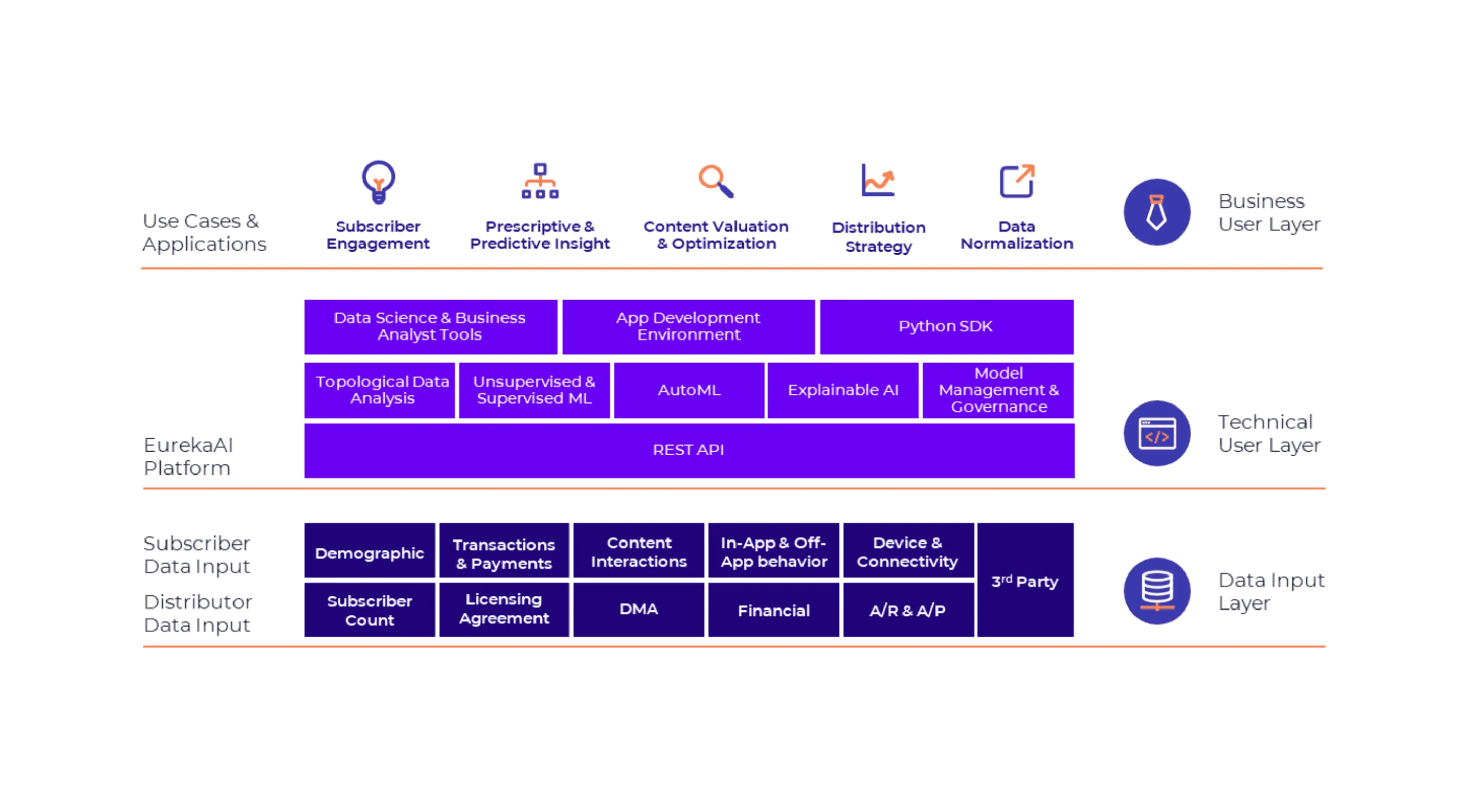
Image Source Revedia Digital Platform Overview
Revedia Digital makes it easy for content sellers to centralize agreement, content, subscriber, and financial data from OTT distribution partners in a single platform, enabling AI-driven analysis that reveals valuable insights with low operational overhead.
With Revedia Digital, content sellers can:
- Streamline and automate data ingestion and normalization to accelerate time-to-insights,
- Leverage revenue analysis and anomaly detection tools to identify errors, avoid revenue leakage, and ensure the accuracy of distributor payments with respect to content licensing agreements,
- Dramatically boost the efficiency of media accounting/finance teams with ready-made reports, enhanced visibility of cash flow, and strategic insights that help content sellers avoid costly mistakes,
- Efficiently value content and measure distributor performance to strategically optimize revenue generation from video assets.