Winning with Grocery's Most Valuable Shoppers

The pandemic has had a profound impact on all types of shopping behaviors, and nowhere was this more evident than with food shopping. Global lockdowns accelerated usage of grocery e-commerce and at-home food preparation surged when dining out wasn’t possible. There were wild swings in behavior the past two years as pandemic conditions evolved, eating out again became possible and grocers resumed their foodservice operations.
Foodservice at retail was initially a casualty of the pandemic as grocers had to curtail or greatly modified operations, but the business has since regained its pre-pandemic momentum and continues to blur the lines between traditional classifications of food at home and food away from home. Because shoppers can now satisfy their hunger in such a wide variety of ways, SymphonyAI wanted to understand the behavior of foodservice at retail shoppers, their usage of the department, its effect on loyalty and the total store impact.
We looked at 341 million foodservice transactions throughout the second half of 2021 across the U.S. and Europe. Then we compared that data to the comparable period in 2019 and leveraged AI to uncover some unique insights that can be used to increase loyalty, grow sales and improve operations. Here’s what we found:
- Foodservice at retail is an important driver of loyalty and frequency, especially among high-value shopper segments. The foodservice department enjoys a 69% penetration rate among all shoppers, but that figure increases to nearly 100% among shoppers defined as “primary” based on shopping frequency and breadth of categories purchased.
- Grocers can ignite a foodservice loyalty loop that kicks in when shopper engagement increases, resulting in increased trip frequency, incremental spending storewide and higher overall satisfaction. But loyal shoppers can’t be taken for granted. The AI analysis of transactions shows they are prone to churn, thus heightening the need for proactive retention strategies.
- There is ample opportunity to retain and increase loyalty among the one-third of shoppers who currently account for 75% of foodservice revenues, but an even bigger payoff awaits with shopper segments who are less loyal and shop less broadly. When these secondary and tertiary shopper segments move up the loyalty ladder, their purchases in the rest of the store increase 72% and 149%, respectively. The impact is significant on even the most loyal shoppers, however, who increase spend by 65% across the rest of the store when they buy foodservice.
- More than 93% of foodservice transactions contain additional items, creating the potential for even greater cross-promotional efforts to drive basket-building, increasing sales of margin-enhancing items that satisfy a broader range of needs, thus improving overall shopper satisfaction.
- Retail foodservice operations are challenging. Continued profitable growth of the business hinges on minimizing complexity, controlling costs, coping with inflation, and integrating overall supply chain systems.
Now what? That’s always the key question in retail when presented with interesting insights. How can organizations move beyond a reaction of “that’s interesting,” to “that’s actionable and here’s how.”
For starters, realize that some insights are about minimizing the downside vs maximizing the upside. The AI models have shown that the best shoppers, those who engage most with foodservice, are incredibly valuable. They must be retained, and if possible, moved to even higher rungs on the loyalty ladder.
AI also uncovered the massive benefits that occur when those who are least engaged with foodservice begin taking advantage of a department that can help simplify their lives. Foodservice in retail has tremendous growth potential as the way the world eats continues to evolve and the distinctions between traditional channels blurs further.
Of course, operating and growing a retail foodservice operation is not for the faint of heart. The department introduces a new layer of complexity to an already challenging grocery industry. However, as our AI analysis of 341 million transactions uncovered, there is great growth potential for grocers to pull harder on the foodservice loyalty lever.
Doing so in an optimal way requires advanced systems to manage inventories and integrate with overall supply chain management solutions. It’s why SymphonyAI introduced kitchen management functionality within our supply chain management tool, helping address business needs essential to long-term strategic growth. This capability ensures grocery retailers have the necessary tools to meet their customer needs both in-store and in central kitchens. Kitchen management enables capabilities such as recipe management, production planning, inventory management, ingredient/fresh data management and traceability and recalls management. When grocers automate kitchen planning and operations, retailers and their customers benefit from fresher, increased availability, lower production costs and far less food waste. Better management of traceability and recalls also ensures food safety is built right into every step of the kitchen process.
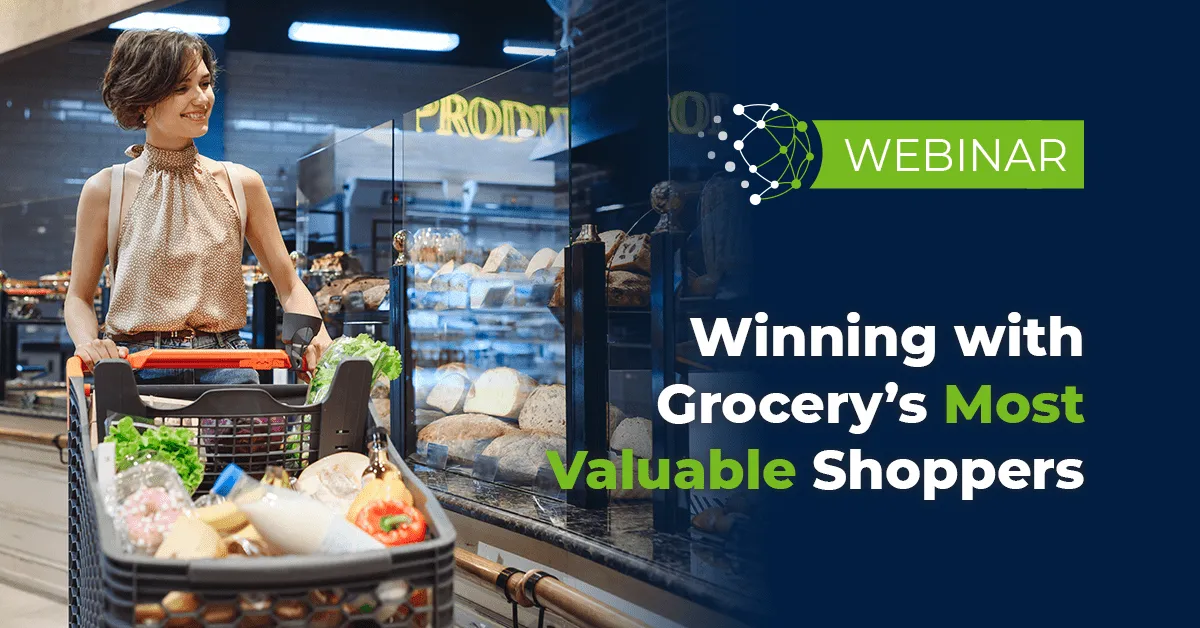
For a deeper dive on our AI analysis of 341 million foodservice transactions, join grocery insights experts Josh McCann and Ann Azzopardi for an on-demand replay of the webinar on, “Winning with Grocery’s Most Valuable Shoppers.” To register, click HERE!
Want more insight on engaging with Grocery’s most valuable shoppers? Speak with one of our solutions experts.