Retail / CPG
.svg)
AI-driven assortment optimization and planogram automation that lift sales and margin across every store in your fleet.


Stores end up carrying products their shoppers do not want and missing products they do. Range reviews run quarterly, built on spreadsheets and judgment calls. By the time a planogram reaches the shelf, the data behind it is months old.
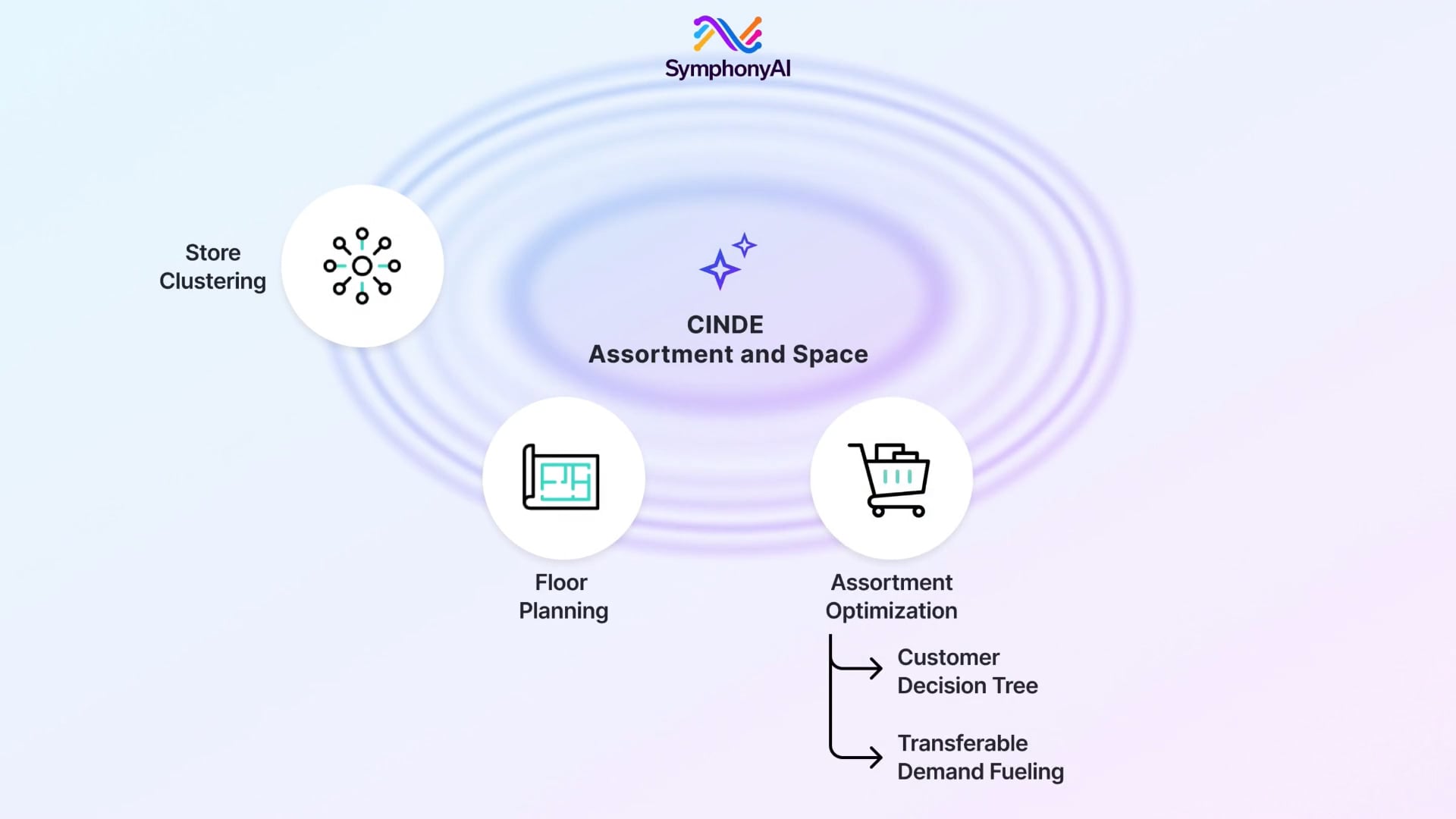

AI groups stores by shopper behavior, demographics, and sales performance, then optimizes the product mix for each group. Your downtown convenience store carries a different range than your suburban supermarket.

Optimization accounts for real fixture dimensions, pack sizes, and days of supply. What the system recommends can be ordered, stocked, and merchandised without rework.

From a single set of rules and model planograms, the system produces store-specific planograms for your entire fleet. Category resets and new item introductions execute in weeks, not months.

Suppliers work inside the same platform using the same optimization model. Both sides see the same data and the same projected outcomes. No more dueling spreadsheets in category reviews.

.svg)
.svg)
.svg)

Traditional range reviews use historical sales and category manager judgment to set one assortment per chain or region. AI optimization uses demand models and store-level clustering to generate a tailored assortment per store type, accounting for substitution effects and space constraints simultaneously.
Planners create model planograms with merchandising rules. The system generates a store-specific planogram for every location automatically, accounting for fixture dimensions, traffic flow, and local assortment. Systembolaget manages 7,500 planograms across 450 stores with 2-3 FTEs this way.
Yes. The Assortment Intelligence module gives CPG partners access to the same optimization platform the retailer uses. Suppliers run distribution modeling, new item impact analysis, and de-listing risk assessment using the retailer’s methodology.
Intelligent clustering groups stores by weighted criteria: shopper behavior, demographics, sales performance, and store attributes. Each cluster gets a differentiated assortment and space plan tailored to local demand patterns.