Generative AI Has a Lot To Say in the Supply Chain
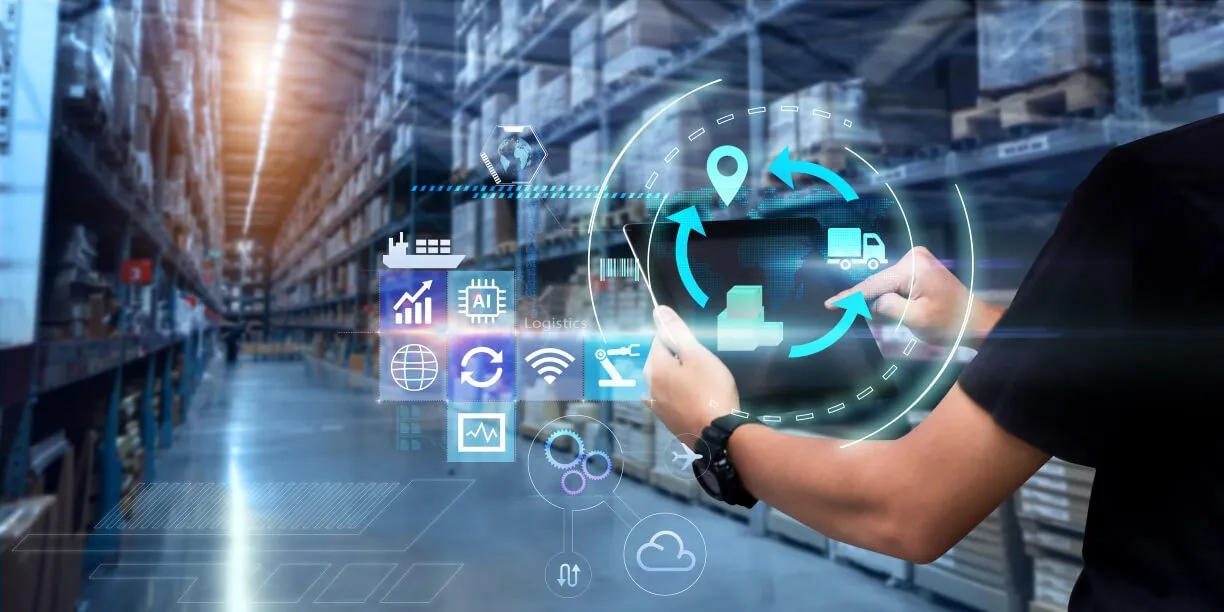
Retailers are ramping up generative AI use cases — giving a voice to how the technology can be used to enhance not only the front-end consumer experience, but also the back-end supply chain.
Companies like OpenAI and its ChatGPT tool are bringing a new, more conversational way of chatting between retailer and shopper, ushering in early examples of generative AI. For example, European fashion retailer Zalando teamed with OpenAI and ChatGPT to develop a fashion assistant, where consumers can ask specific questions like, “Find me a striped shirt dress with pockets for a cocktail party in Hackney?” The shopper can add in specifics such as sizes, brands and more, and receive highly targeted recommendations. What’s more, the tool can understand colloquial and trending terms in fashion, relying on the huge amounts of data behind ChatGPT’s large language model.
Similarly, in the U.S., leading online retailer Instacart rolled out a ChatGPT-powered shopping assistant called “Ask Instacart,” helping consumers build shopping lists by asking the tool to recommend meals or ask for certain products.
Both examples are entry-level ways of getting shoppers comfortable with generative AI. They are also examples of retailers trusting the technology, because generative AI will grow to play a more integral role in how retailers run a more effective end-to-end retail operation.
While consumer-facing applications of generative AI get more of the attention, more practical and equally high-impact uses can happen on the back end.
Generative AI for the supply chain
For clarity, generative AI is a function of the larger artificial intelligence and machine learning environment. It’s a technology that accesses machine learning models and information to generate content, imagery, synthetic data and more based on user inputs. In that regard, it’s easy to see the technology innovate customer search online or enhance how copywriters write product descriptions on brand pages. It’s harder to visualize within the supply chain.
Realistically though, the technology can play the role of co-pilot for different functions throughout the supply chain. If retailers connect and thread AI throughout an organisation — avoiding the tendence for each business unit to use AI independently in a silo — generative AI can help the supply chain run at its very smartest. Let’s look at three ways.
- Category managers. Connected data, specifically, can help category managers see in real time how products are performing at a store level or by a cluster of stores. A category manager at a grocer, for example, can run endless scenarios of the cereal aisle, adding and removing brands, low-sugar cereals and high-fibre options. The AI recommends the highest-performing scenarios, and generative AI writes a summary report including recommendations and transparency into the “why” behind those recommendations. Managers need to oversee the recommendations and confirm results, with generative AI serving as an assistant to boost productivity and enable category managers to focus on strategic rather than repetitive priorities.
- Store associates. Meanwhile, in a grocer’s centre-store aisles, a store associate with a tablet, powered by computer vision and AI, can use the tablet to scan the rows of cereal in front of them. Computer vision technology reads the planogram for inconsistencies and errors. Generative AI can produce an image for that associate of where items are incorrectly placed or highlight a risk of near-term out-of-stock.
- Logistics coordinators. AI is used within supply chain optimization to predict, allocate and route the right products in the right quantities to the right stores. Generative AI can deliver reports to the supply chain and logistics teams using real-time data from category managers executing category plans for different categories, stores and store clusters. The AI can help ensure allocation and fulfillment of the right inventory from the right sources to the correct stores to run the most efficient supply chain possible.
Democratizing data and AI generates stronger companies
Retailers that deploy stitched-together data throughout the organisation can leverage generative AI to help produce content, reports, and data analysis that meet the direct needs of different personas throughout an organisation — category managers, store associates, logistics coordinators, senior-level executives and so on.
While generative AI can be an experiential tool to grow brand and retailer engagement with shoppers, the tool shows transformational promise when used by internal teams empowered with end-to-end capabilities. With curated, high-integrity data sources, strong role-specific design and full transparency and auditability, responsibly engineered enterprise solutions using generative AI give users more confidence, control and fluency in using the tools. Secondly, each business unit can continually tailor the generative AI to read the data they need and generate the content that’s most impactful as they grow more sophisticated with the technology.
In the end, multiple connection points powered by AI and generative AI capabilities can work to create a more efficient supply chain. The intelligence and learning within the solutions only grow stronger when they’re connected throughout the entire retailer organisation — end to end — and the retailer’s supply chain continues to gain agility, effectiveness, and operational efficiency.
Author Bio: Vijay Raghavendra is chief technology officer at SymphonyAI, a provider of end-to-end, integrated AI-powered merchandising, marketing and supply chain solutions for retailers and CPGs.