Revenue growth management for CPGs
Revenue Growth Management (RGM) is a strategic framework used by CPGs to maximize revenue and profitability through optimized pricing, promotions, product mix, and trade investments. By leveraging data analytics and consumer insights, RGM enables companies to make informed decisions that drive sustainable growth in competitive markets.

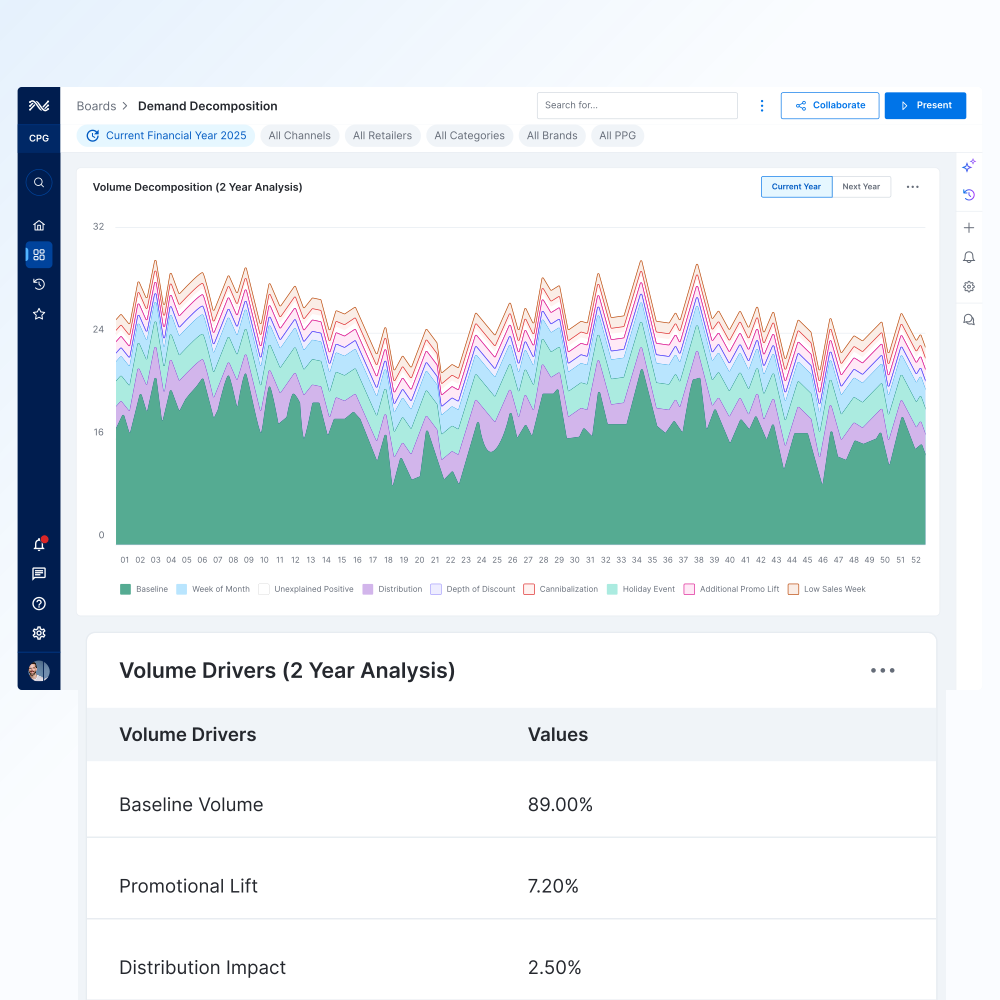
Major advances in AI-powered analytics make RGM goals attainable
What is Revenue Growth Management?
Revenue Growth Management (RGM) is a strategic approach used by Consumer Packaged Goods (CPG) companies to optimize their revenue and profitability through a combination of pricing, promotions, assortment, and trade investment strategies.
The core idea behind RGM is to understand consumer behavior, competitive dynamics, and market trends to make data-driven decisions that drive sustainable growth.

Pricing strategy
- Everyday Pricing: Setting regular prices for products that balance consumer demand with profitability.
- Promotional Pricing: Planning temporary price reductions or promotions to boost short-term sales without eroding long-term profitability.
- Price Architecture: Creating a structured pricing approach across different product sizes, variants, and formats to cater to diverse consumer segments.

Promotional effectiveness
- Analyzing past promotions to understand their impact on sales volume, market share, and profitability.
- Optimizing promotional spend to maximize ROI while ensuring brand health.
- Utilizing techniques like lift analysis, cannibalization analysis, and incremental sales measurement.

Assortment optimization
- Deciding the optimal product mix for different retail channels or regions.
- Removing underperforming SKUs and introducing new products based on consumer preferences and market trends.
- Aligning assortment with retailer strategies and shopper needs.

Trade investment management
- Allocating budgets effectively across retailers and channels to maximize impact.
- Monitoring trade spend efficiency and negotiating trade terms with retail partners.
- Balancing trade support between driving volume and enhancing brand equity.

Market segmentation
- Segmenting consumers and channels based on purchasing behavior, price sensitivity, and brand loyalty.
- Tailoring strategies for different segments to enhance relevance and engagement.

Data and analytics
- Leveraging data analytics to gain insights into consumer behavior, competitive actions, and market trends.
- Utilizing predictive and prescriptive analytics to forecast demand, optimize pricing, and improve promotional planning.
- Incorporating AI and machine learning to automate decision-making and personalize consumer interactions.

Integrated planning
- Collaborating across functions like marketing, sales, finance, and supply chain for cohesive strategy execution.
- Utilizing integrated planning tools to ensure alignment and agility in responding to market changes.
Benefits of revenue growth management
RGM is essential for CPG companies aiming to navigate complex retail environments, shifting consumer preferences, and intense competition. By focusing on revenue growth drivers, companies can achieve sustainable and profitable growth.
Enhanced profitability through optimized pricing and promotions.
Improved market share by effectively targeting consumer needs.
Better trade relations by providing data-driven insights to retailers.
Increased agility in responding to competitive pressures and market changes.
Discover the value of SymphonyAI