Retail doesn’t run on averages. Neither do we.
From supply to shelf, SymphonyAI drives real-time decisions that protect margin, grow sales, and give you control—store by store, SKU by SKU.





















Results powered by retail AI
Increase in basket size – Personalized recommendations that drive higher AOV.
Reduction in supply chain costs – Smarter inventory placement and faster order fulfillment.
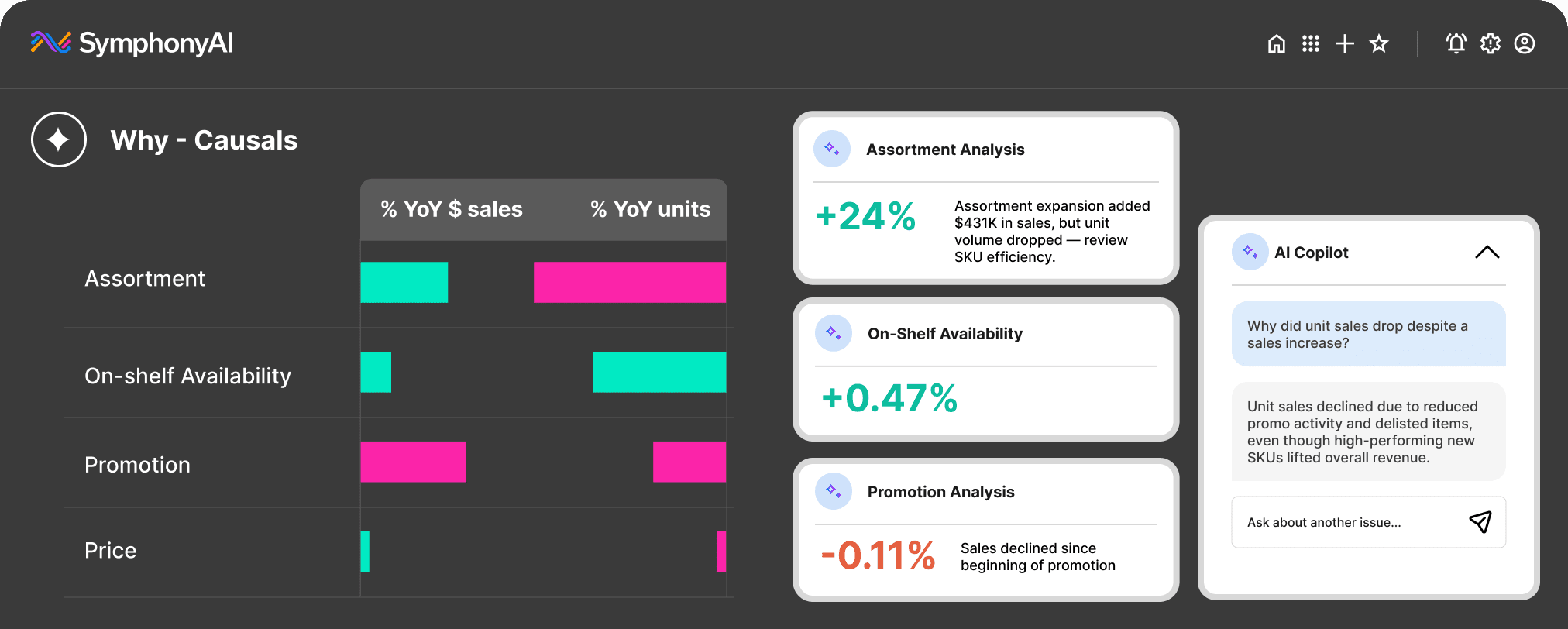
Category growth – Optimized assortment and promotion decisions that unlock incremental sales.
Faster promotion execution – Reach customers at the right moment, every time.
Increase in on-shelf availability – Reduce stockouts with predictive inventory and replenishment planning.
Increase in incremental sales – AI-powered pricing, promotion, and assortment decisions that unlock new revenue.
From warehouse to shelf to refrigerator, SymphonyAI powers every link across the value chain.
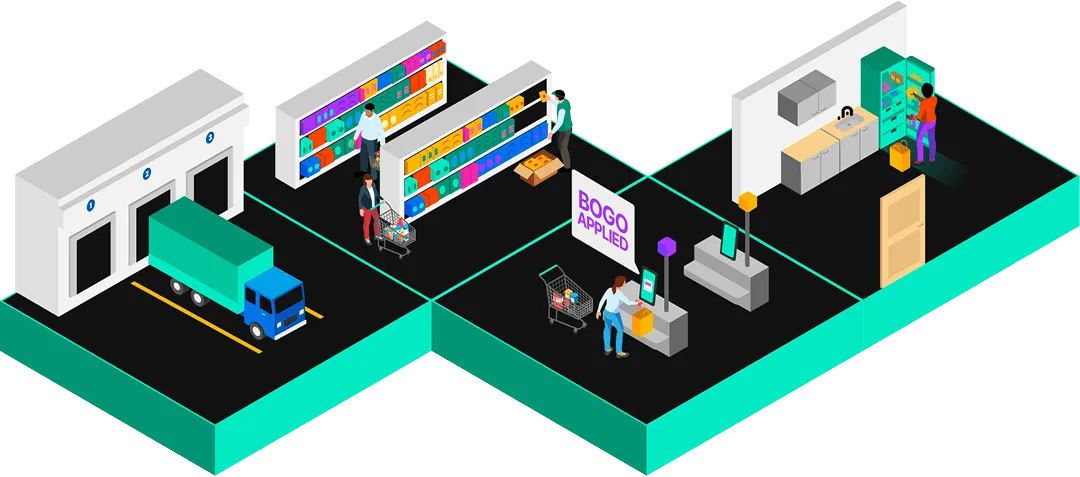
Reacting to stale data means missed demand, mistimed promos, and lost margin. SymphonyAI unifies forecasting, merchandising, and supply chain execution in real time—so you’re not lagging behind. You’re out in front.
Unlike point solutions, SymphonyAI unifies your retail data—from warehouse to register—to power faster moves, tighter margins, and better loyalty, every day.
AI that works for you


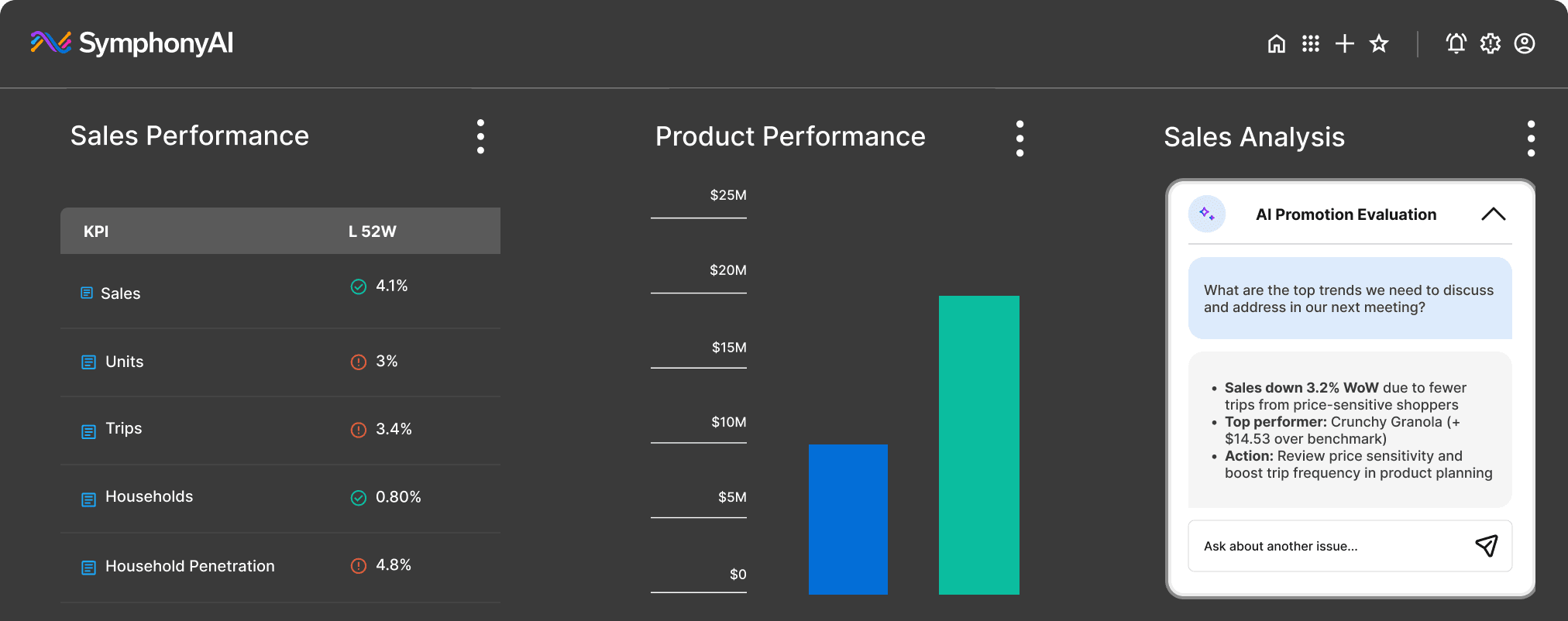
- Assortment Optimization: Align product selections with customer demand and category goals for maximum profitability.
- Pricing and Margin Management: Maximize GMROI with dynamic, data-driven pricing.
- Promotional Effectiveness: Optimize category growth with AI-tuned promotions and reduce markdown waste.
- Personalized Product Recommendations: Drive higher AOV and repeat purchases with personalized assortments.
- Higher GMROI and category profitability
- Faster response to market changes
- Reduced markdown waste
- Improved customer satisfaction and loyalty


- Planogram and Shelf Planning: Optimize shelf layouts for sales impact and compliance.
- Store Intelligence: Improve labor efficiency, reduce stockouts, and boost customer satisfaction.
- Visual Merchandising Consistency: Ensure every store reflects your brand’s standards.
- Increased sales per linear foot
- Higher planogram compliance
- Improved in-store conversion rates
- Lower shrink and spoilage rates
- Faster execution and reduced labor costs


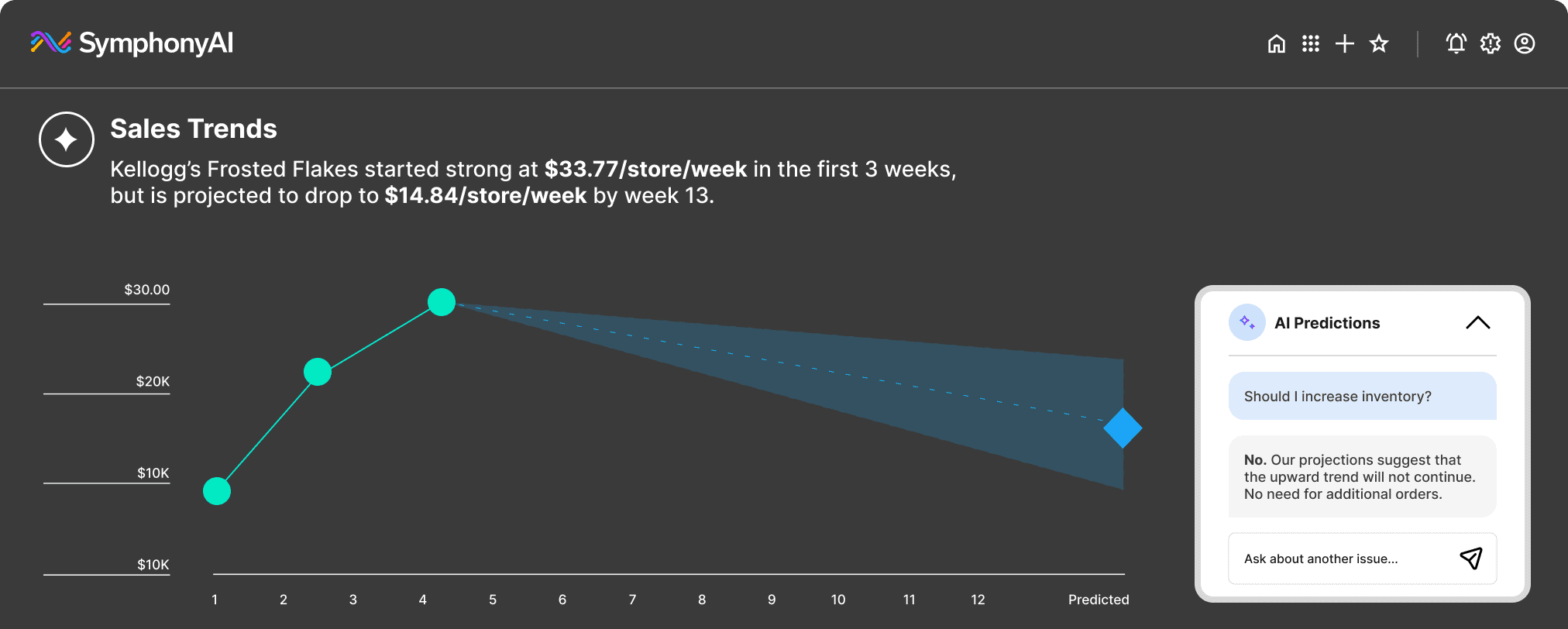
- Demand Forecasting: Predict sales volumes and avoid costly overstocks and stockouts.
- Replenishment and Allocation: Automate inventory flows and minimize carrying costs.
- Supply Chain Intelligence: Optimize inventory placement and transportation for lower costs.
- Higher forecast accuracy
- Reduced carrying costs
- Improved on-time, in-full delivery rates
- Lower carbon footprint
- Faster response to supply chain disruptions
- Assortment Optimization: Align product selections with customer demand and category goals for maximum profitability.
- Pricing and Margin Management: Maximize GMROI with dynamic, data-driven pricing.
- Promotional Effectiveness: Optimize category growth with AI-tuned promotions and reduce markdown waste.
- Personalized Product Recommendations: Drive higher AOV and repeat purchases with personalized assortments.
- Higher GMROI and category profitability
- Faster response to market changes
- Reduced markdown waste
- Improved customer satisfaction and loyalty
- Planogram and Shelf Planning: Optimize shelf layouts for sales impact and compliance.
- Store Intelligence: Improve labor efficiency, reduce stockouts, and boost customer satisfaction.
- Visual Merchandising Consistency: Ensure every store reflects your brand’s standards.
- Increased sales per linear foot
- Higher planogram compliance
- Improved in-store conversion rates
- Lower shrink and spoilage rates
- Faster execution and reduced labor costs
- Demand Forecasting: Predict sales volumes and avoid costly overstocks and stockouts.
- Replenishment and Allocation: Automate inventory flows and minimize carrying costs.
- Supply Chain Intelligence: Optimize inventory placement and transportation for lower costs.
- Higher forecast accuracy
- Reduced carrying costs
- Improved on-time, in-full delivery rates
- Lower carbon footprint
- Faster response to supply chain disruptions
From automation to autonomy—AI for retail


The future of retail isn’t waiting. Neither should you.
See why the world’s top retailers are adapting faster, executing sharper, and winning bigger with SymphonyAI.