From Silos to Intelligence: Rebuilding Financial Crime Programs for Effectiveness

Last updated: 26 November 2026
Japan's financial institutions face a clear new standard. Meeting it requires an integrated, intelligence-led operating model, with artificial intelligence (AI) as the engine rather than the destination.
Japan's financial institutions are being measured against a new standard. Showing that anti-money laundering (AML) policies exist, and procedures are documented is no longer enough. Regulators want evidence that your controls find real risk, investigate it properly, and report it effectively. Japan's fifth mutual evaluation by the Financial Action Task Force (FATF) is now in preparation, with the on-site review scheduled for around summer 2028. That shift from compliance on paper to measurable effectiveness will define how financial crime programs are judged in Japan.
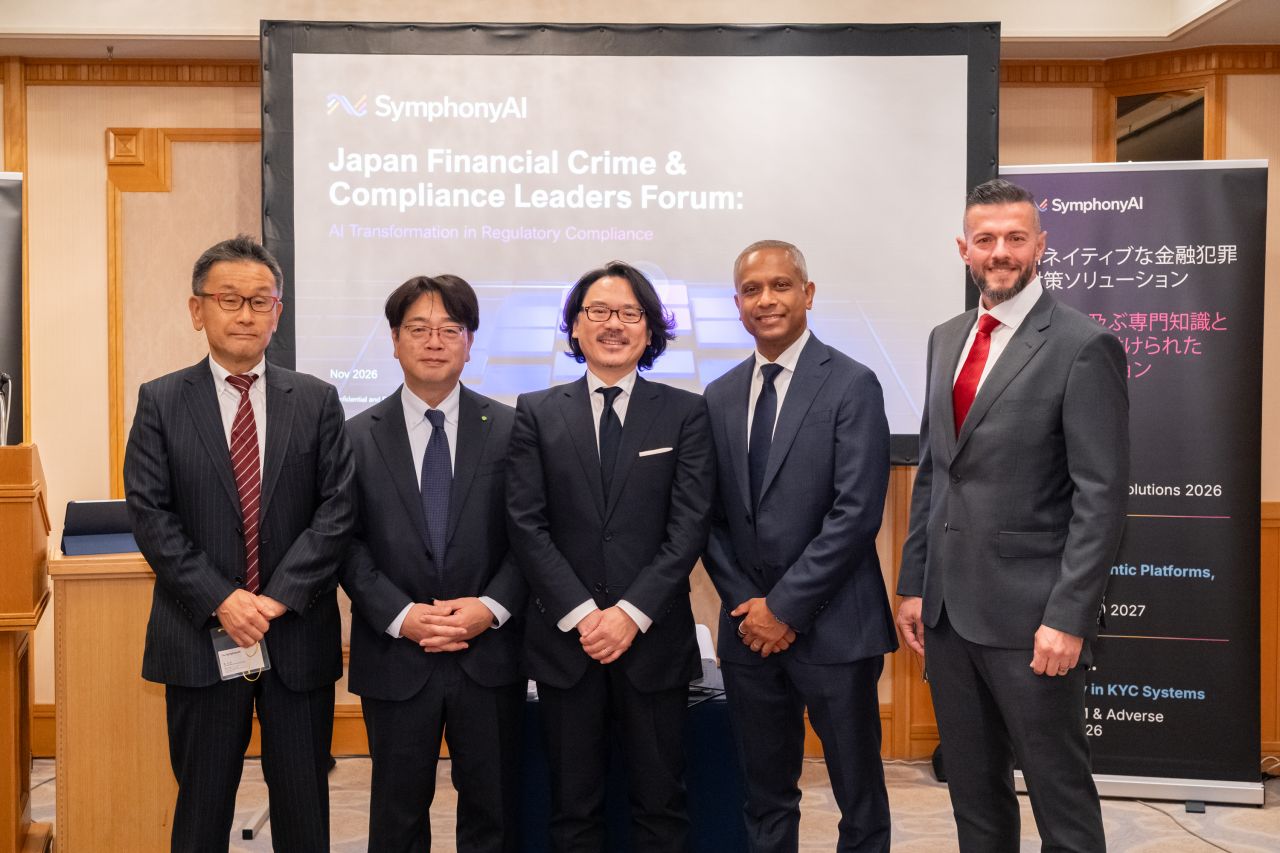
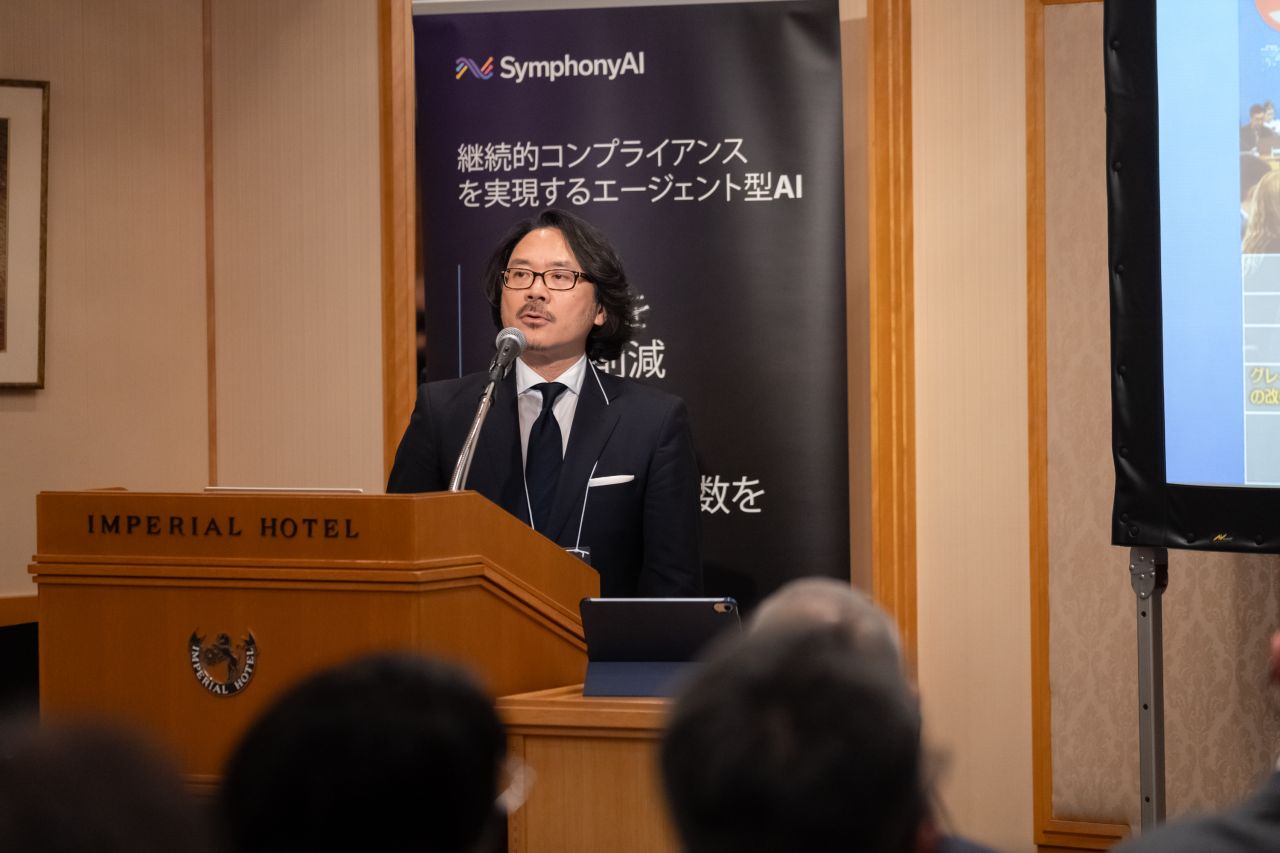
The discussions at our SymphonyAI Japan Financial Crime Compliance Leaders Forum: AI Transformation in Regulatory Compliance made one point clear to me. Regulators and industry leaders are asking the same question from different angles: can your financial crime program produce measurable results?
Why fragmented programs are struggling
Most financial crime programs were built in silos. AML, fraud, sanctions, know your customer (KYC), and cyber risk each sit with separate teams, separate data, and separate tools. That structure made sense when these risks were distinct. They no longer are.
Criminals do not respect those boundaries. A single scheme can combine an account takeover, a scam that moves funds through mule accounts, and a sanctions-linked counterparty. When each team sees only its own slice, your institution sees fragments, and criminals exploit the gaps between them.
This challenge was echoed repeatedly in discussions with Japanese regulators, consulting firms, and financial institutions. Criminals move seamlessly across fraud, cybercrime, sanctions evasion, scams, account takeover, and money laundering. Yet many financial institutions continue to manage these risks through separate teams, processes, and technology platforms. As financial crime becomes increasingly interconnected, institutions can no longer demonstrate effectiveness through isolated controls. Effectiveness depends on a unified understanding of customer, transaction, and network risk across the entire financial crime lifecycle.
What regulators now expect
Expectations are expanding in three directions:
- Effectiveness: Institutions must demonstrate that their programs produce measurable outcomes, not simply that policies are in place. You need to show that you can identify, investigate, and report financial crime risk.
- Scope: Expectations now extend beyond traditional AML to terrorist financing (TF) and proliferation financing (PF).
- Transparency: Regulators expect explainable decisions, strong governance, and proofthat controls deliver meaningful results.
A risk-based approach remains central. You mustunderstand your own risk profile and allocate resources accordingly. Ongoing customer due diligence, transaction monitoring, and risk assessment must function as one integrated framework, not as three separate compliance activities.
Three shifts toward an intelligence-led model
Moving from fragmented programs to an integrated model requires three shifts:
- From reactive to Always-on Compliance: Traditional programs respond to known risks and periodic rule changes. An always-on model adapts continuously to new threats, changing customer behavior, and evolving regulatory expectations.
- From silos to a unified view: Connect customer, entity, transaction, network, fraud, cyber, and sanctions data so you see risk as a whole. Connected data matters more than any single new tool.
- From systems of record to a system of intelligence: Systems of record show what happened. A system of intelligence links regulations, internal policies, customer data, transactions, network relationships, and emerging threats into decisions you can act on.
This transformation is not only a technology project. Governance, ownership, and accountability must evolve alongside data integration. Decide who owns a risk that spans two teams, define how you measure outcomes across them, and make cross-functional collaboration a standard part of how investigations run.

AI as the enabler, not the destination
Building an AI agent becomes easier every day. That is exactly why I believe the agent itself is not your competitive advantage. Your advantage comes from giving agents the right context: financial crime domain expertise, cross-domain risk intelligence, governance, and the ability to explain every decision. An agent without that context produces activity. An agent with it produces outcomes you can defend to a regulator.
AI should augment your investigators, not replace them. AI gathers information, analyzes large data sets, surfaces hidden relationships between accounts and parties, and supports decision making. Your people remain responsible for judgment and accountability. A human-in-the-loop design keeps that responsibility clear and auditable.
The efficiency that automation creates should flowback into effectiveness. When automation clears routine work, redirect investigators toward higher-value cases, network-level threats, and proactive risk management.
Making AI work in production
A proof of concept is easy to build. A production deployment in a regulated institution is far harder. Financial institutions need AI that is explainable, auditable, governed by strict access controls, and economically viable at scale. Cost matters: a model that is too expensive to run across millions of transactions will not survive budget review.
SymphonyAI is developing domain-specific financial crime language models to meet this need. They are designed to reduce operating costs, give institutions greater control over their data and deployment, and support long-term AI adoption. Benchmark results show up to 60x cost efficiency improvements in certain use cases.
Regulatory change also demands a faster response. Future platforms should translate regulatory and policy changes into updated controls, test those controls through simulation, and deploy them through governed processes.
Transformation does not require replacing what you already run. AI-powered intelligence, detection, and investigation capabilities can be layered onto existing environments, so you move toward an adaptive operating model in stages.
Where SymphonyAI fits
SymphonyAI brings together financial crime domain expertise, cross-domain risk intelligence, detection and investigation capabilities, governance and explainability, and continuous adaptation to regulatory change. We deliver these in a production-ready environment built for highly regulated institutions. That combination, rather than any single agent, is what helps you meet the effectiveness standard and combat increasingly sophisticated financial crime.

Where to start
The direction is clear. The question for every institution is no longer whether to integrate its financial crime program, but how soon it starts. Begin with one connected view of risk, one measurable outcome that regulators will recognize, and one governed AI use case. Build from there and let each result strengthen the next.
SymphonyAI will be at The Assembly Japan, hosted by the Association of Certified Anti-Money Laundering Specialists (ACAMS), on 8 and 9 December 2026.
If your organization is preparing for FATF effectiveness assessments, evaluating integrated AML and fraud operating models, or exploring the practical application of AI in financial crime investigations, we would welcome the opportunity to exchange perspectives and share lessons learned from discussions across the Japanese market. To arrange a discussion with the SymphonyAI team, contact Kosaku Kakehi, Japan Market Development Lead at kosaku.kakehi@symphonyai.com.
Discover Symphony Risk Intelligence
The AI-native FinCrime platform designed to help financial institutions move from reactive to proactive risk management.

Albert van Wyk is Vice President for Asia Pacific at SymphonyAI, where he leads the charge in bringing advanced AI solutions to market and tackling some of the region’s toughest challenges in financial services. With more than 20 years of experience across leadership roles at GBG Plc, Experian, and NICE Systems, Albert has built a reputation for growing businesses, developing high-performing teams, and forging partnerships that last. He’s passionate about using technology to create measurable impact and staying ahead of evolving market trends. When he’s not talking tech and business, you’ll find him sharing insights on leadership and the future of AI.