An Intensifying AML Landscape and The Financial Industry’s Response

2020 shaped up to be a year no one will ever forget or onethat anyone could have seen coming. Within a few short months, the globallandscape of how society lives and works changed completely, and a differentway of life was forced upon us. This was exceptionally difficult for thefinancial industry that has existed for centuries and is one of society'sessential businesses.
- Compliance staff transitioned to remote working, which slowed down major internal functions such as conducting KYC, customer risk profiling, transaction monitoring alerts and watchlist screening.
- Stimulus relief was rapidly implemented leaving financial institutions to juggle the demands of new legislation (e.g. onboarding and CDD) and the timely distribution of funds to those in dire need.
- Stimulus relief funds also caused an exponential increase in application fraud and mule activity and was further exacerbated by the boom in digital banking adoption.
- Increased economic instability led financial institution's leadership to make budget cuts that will impact future expenditures on technology and resources, and inevitably affect efficiency gains.
Impacts of COVID-19 Pandemic
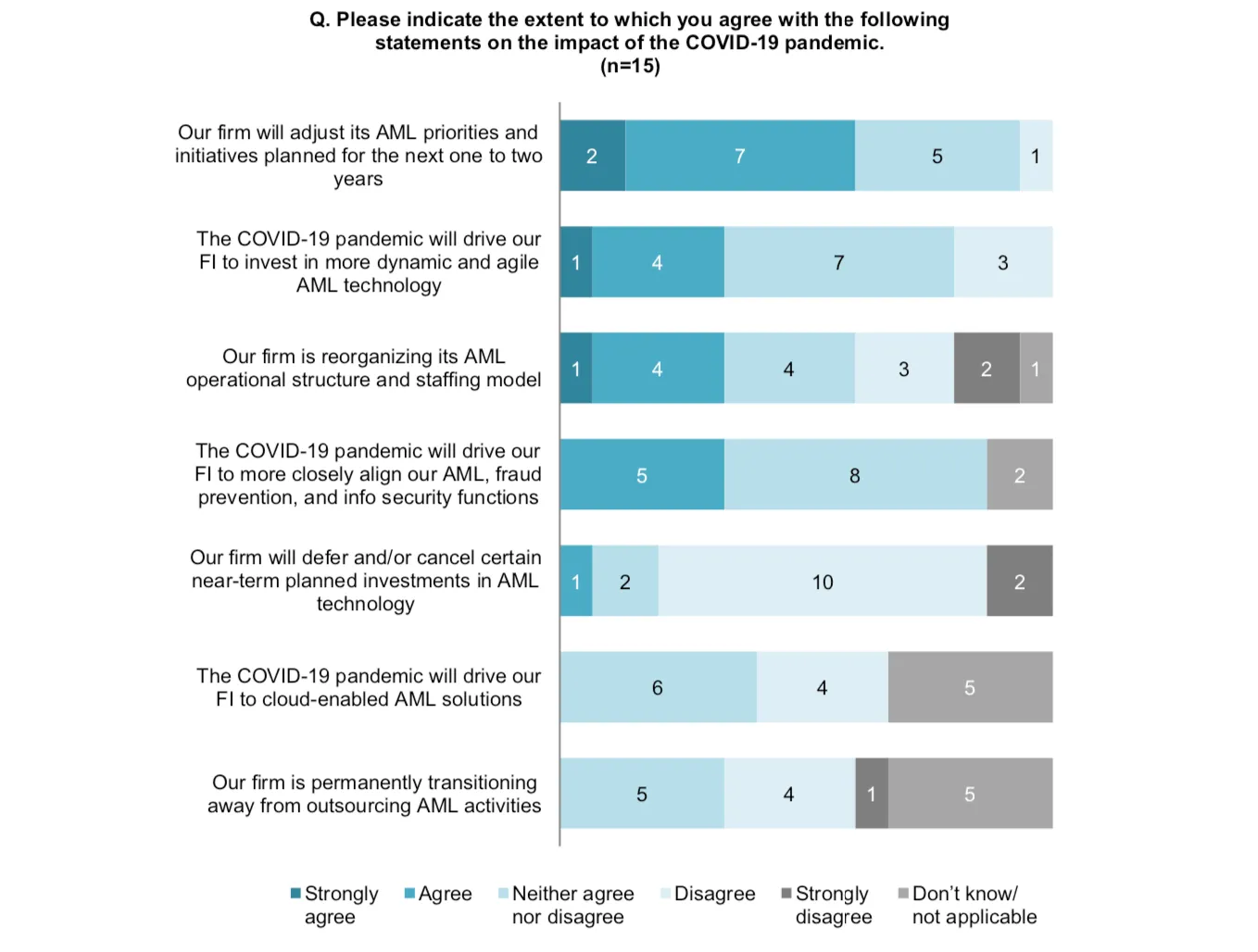
Figure 1: Source - Aite Group survey of 22 financial crime professionals, September 2020
In September 2020, the Financial Crimes Enforcement Network(FinCEN) published an advance notice of proposed rule-making forecastingpotential regulatory amendments "intended to modernize the [AML]regulatory regime." FinCEN's proposals attempt to articulate an"effective and reasonably designed" standard that would drive greaterrisk-based approaches to AML compliance and resource allocation.[1] Thisis forecasting to stricter regulation and specifically "risk-basedapproaches to AML compliance." Current methods of detection lack in manyareas, and below is a graph of expected spending over the next two years for 22banks surveyed for the Aite report.
AML Related Spending Forecasts Overthe Next Two Years
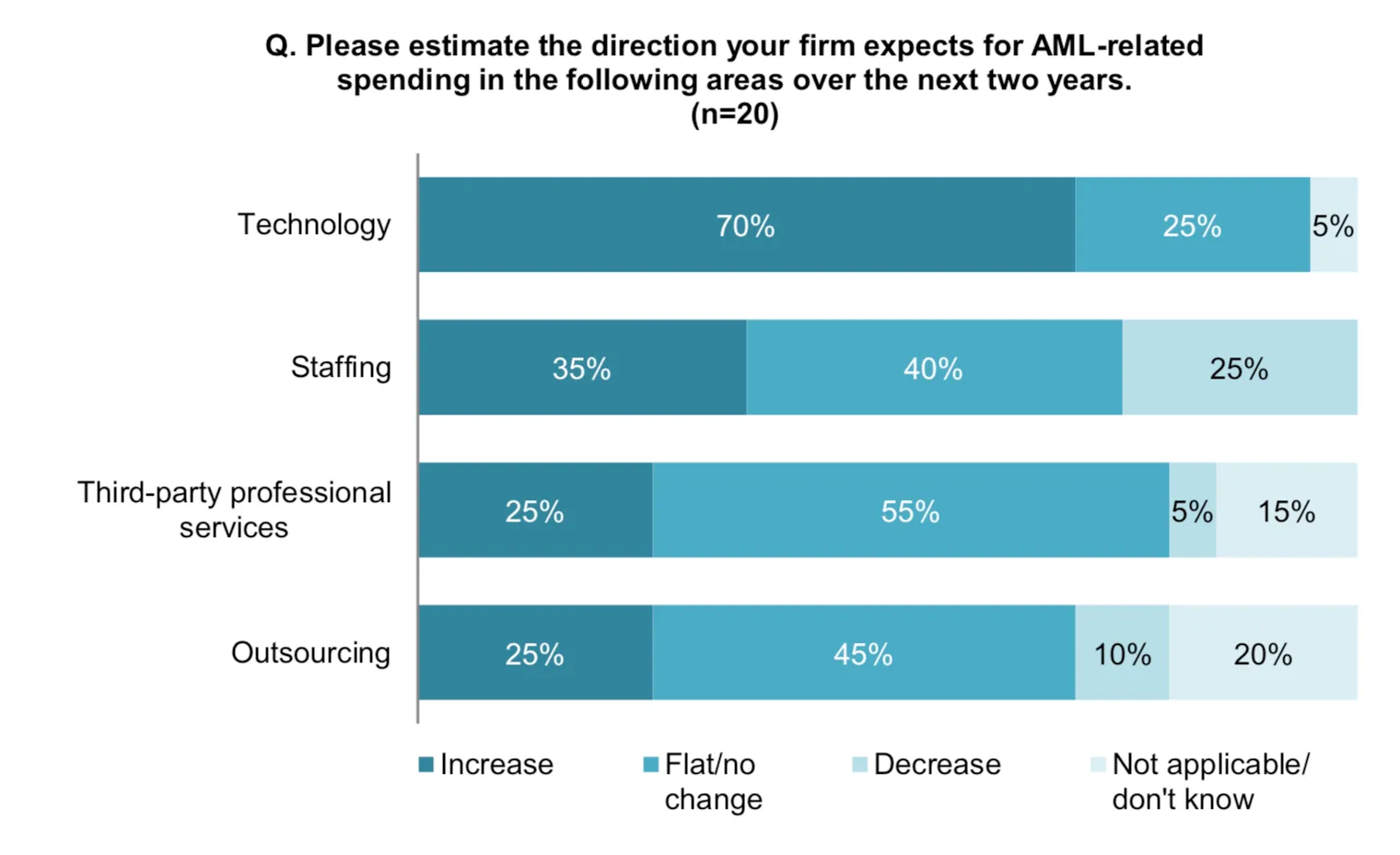
Figure 2: Source - Aite Group survey of 22 financial crime professionals, September 2020
Regulatory bodies haveemphasized innovation and eased regulations on implementing new technologies,but certain hurdles continue to hold the industry back from utilizingnext-generation technology for combating financial crime. When surveyed abouttheir level of importance for investing in technology, banks responded asfollows:
- Machine learning for transaction monitoring and sub-areas of detection. Demand for AI and automation to augment information gathering so investigators can spend more time making informed decisions.
- Investigation optimization with better data gathering and management (customer transactions, screening related parties, PEPs, adverse media watchlist, etc.) for customer onboarding.
- Case management solution with a single unified view for analysis and decision-making.
AyasdiAI's Sensa-NetRevealAML™ was created with these challenges in mind, and here is how it tackles the various shortcomings of an AML monitoring platform.
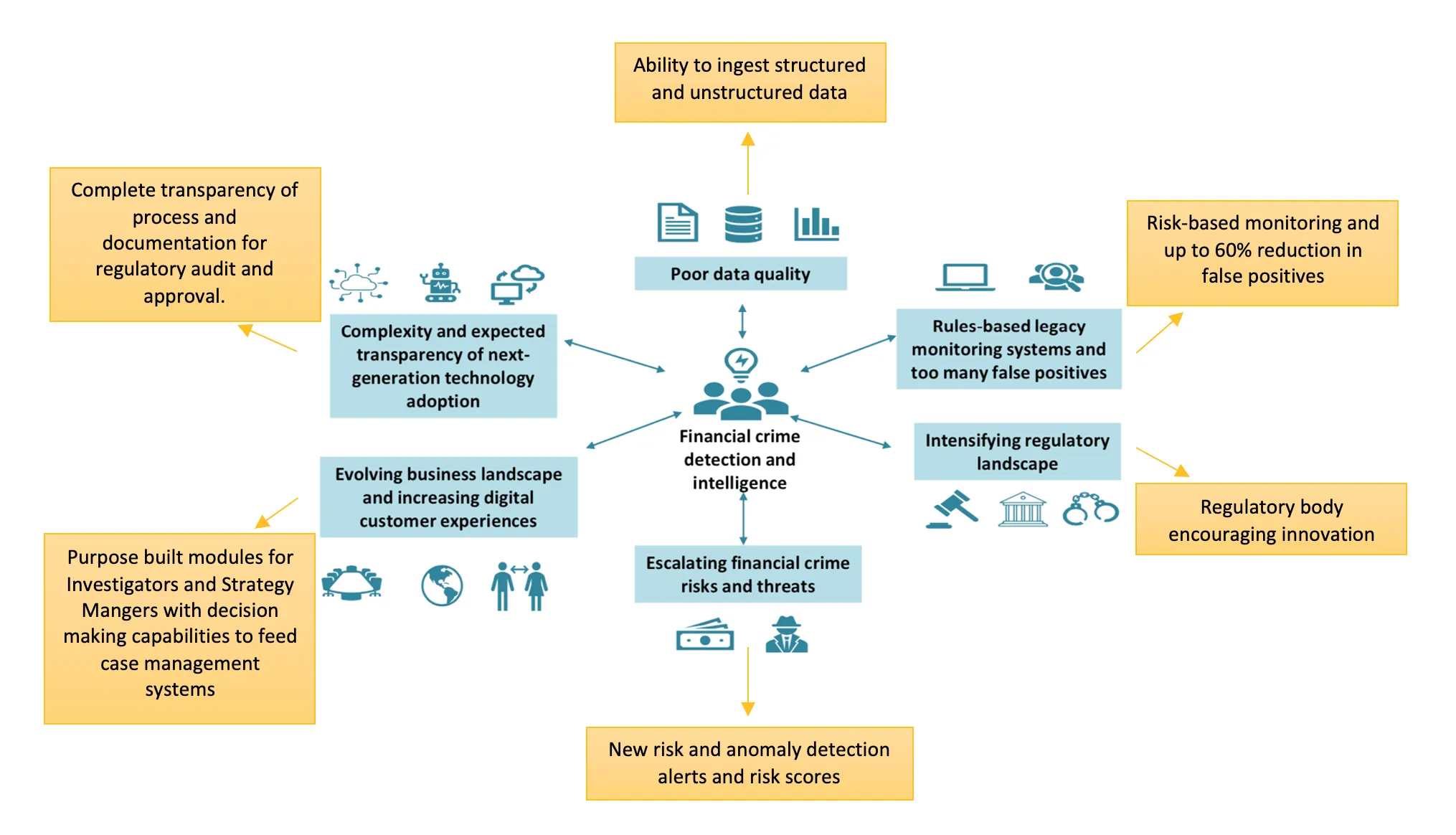
The financial industry must maintain business as usual while keeping abreast of regulatory requirements and changes. They must be more cautious in their spending by doing more with what they have and investing in technology to improve their detection and reporting capabilities. The net result should provide efficiency gains from an operational and cost perspective.
[1] “Anti-Money Laundering Program Effectiveness: A Proposed Rule by the Financial Crimes Enforcement Network on 09/17/2020,” Federal Register, September 17, 2020, accessed December 20, 2020, https://www.federalregister.gov/documents/2020/09/17/2020-20527/anti-money-laundering- program-effectiveness.
2020 shaped up to be a year no one will ever forget or onethat anyone could have seen coming. Within a few short months, the globallandscape of how society lives and works changed completely, and a differentway of life was forced upon us. This was exceptionally difficult for thefinancial industry that has existed for centuries and is one of society'sessential businesses.
- Compliance staff transitioned to remote working, which slowed down major internal functions such as conducting KYC, customer risk profiling, transaction monitoring alerts and watchlist screening.
- Stimulus relief was rapidly implemented leaving financial institutions to juggle the demands of new legislation (e.g. onboarding and CDD) and the timely distribution of funds to those in dire need.
- Stimulus relief funds also caused an exponential increase in application fraud and mule activity and was further exacerbated by the boom in digital banking adoption.
- Increased economic instability led financial institution's leadership to make budget cuts that will impact future expenditures on technology and resources, and inevitably affect efficiency gains.
Impacts of COVID-19 Pandemic
Figure 1: Source - Aite Group survey of 22 financial crime professionals, September 2020
In September 2020, the Financial Crimes Enforcement Network(FinCEN) published an advance notice of proposed rule-making forecastingpotential regulatory amendments "intended to modernize the [AML]regulatory regime." FinCEN's proposals attempt to articulate an"effective and reasonably designed" standard that would drive greaterrisk-based approaches to AML compliance and resource allocation.[1] Thisis forecasting to stricter regulation and specifically "risk-basedapproaches to AML compliance." Current methods of detection lack in manyareas, and below is a graph of expected spending over the next two years for 22banks surveyed for the Aite report.
AML Related Spending Forecasts Overthe Next Two Years
Figure 2: Source - Aite Group survey of 22 financial crime professionals, September 2020
Regulatory bodies haveemphasized innovation and eased regulations on implementing new technologies,but certain hurdles continue to hold the industry back from utilizingnext-generation technology for combating financial crime. When surveyed abouttheir level of importance for investing in technology, banks responded asfollows:
- Machine learning for transaction monitoring and sub-areas of detection. Demand for AI and automation to augment information gathering so investigators can spend more time making informed decisions.
- Investigation optimization with better data gathering and management (customer transactions, screening related parties, PEPs, adverse media watchlist, etc.) for customer onboarding.
- Case management solution with a single unified view for analysis and decision-making.
AyasdiAI's Sensa-NetRevealAML™ was created with these challenges in mind, and here is how it tackles the various shortcomings of an AML monitoring platform.
The financial industry must maintain business as usual while keeping abreast of regulatory requirements and changes. They must be more cautious in their spending by doing more with what they have and investing in technology to improve their detection and reporting capabilities. The net result should provide efficiency gains from an operational and cost perspective.
[1] “Anti-Money Laundering Program Effectiveness: A Proposed Rule by the Financial Crimes Enforcement Network on 09/17/2020,” Federal Register, September 17, 2020, accessed December 20, 2020, https://www.federalregister.gov/documents/2020/09/17/2020-20527/anti-money-laundering- program-effectiveness.