Intelligent Factory Agent
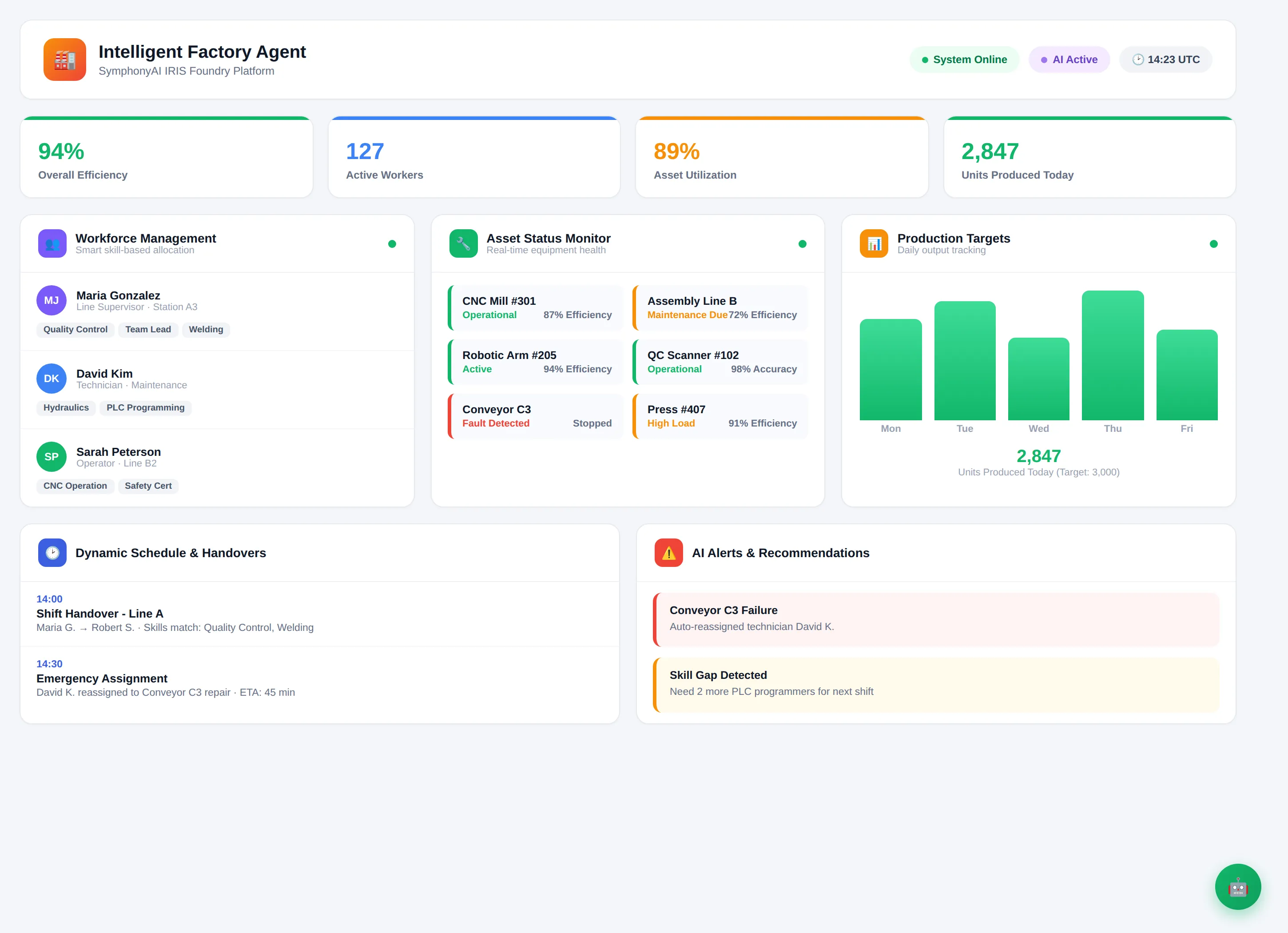
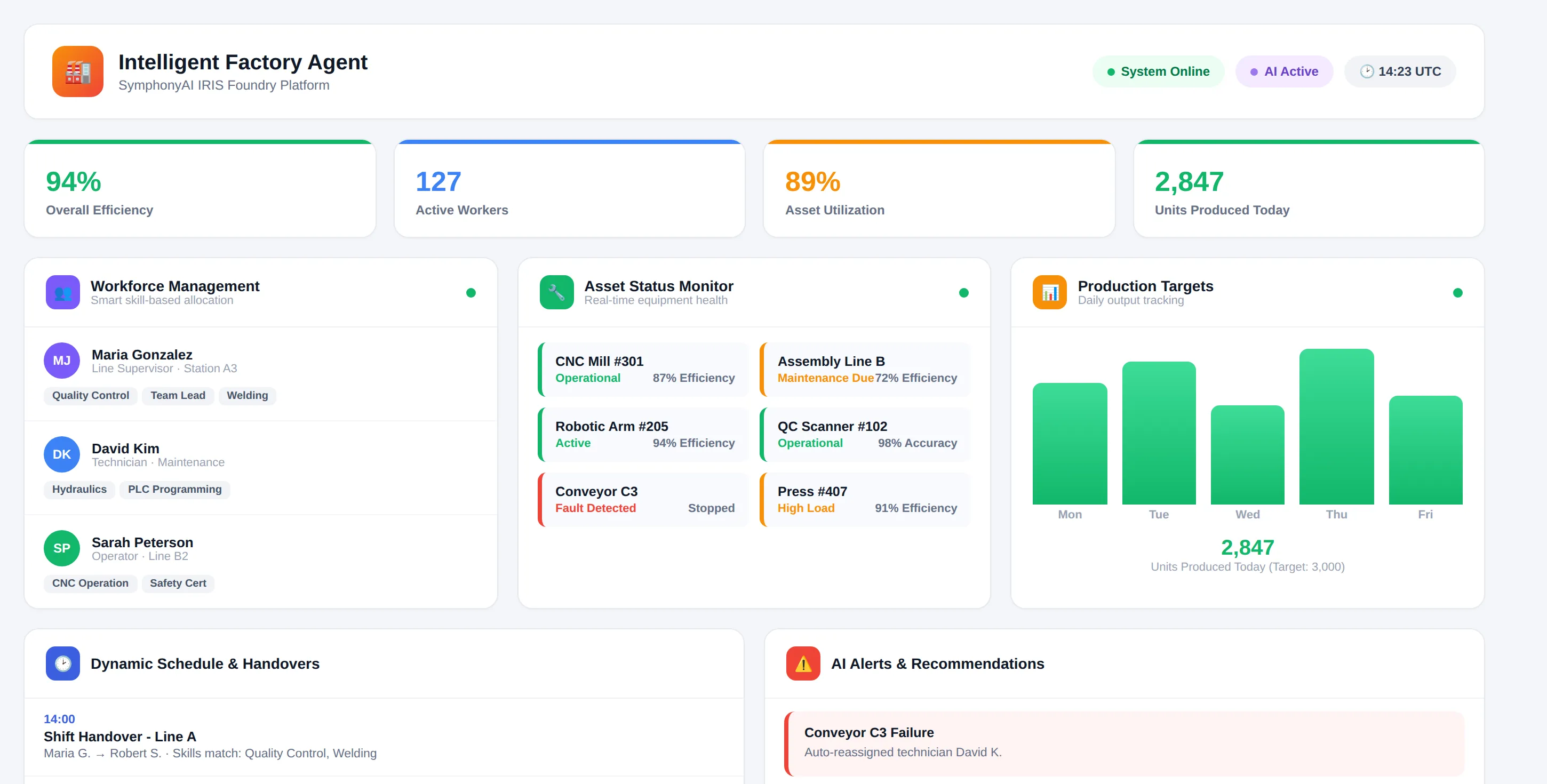
Coordinate factory operations by linking worker schedules, skills, asset status, and production targets. Built on IRIS Foundry, the agent keeps people, processes, and machines in sync with dynamic workforce assignment, skills-based scheduling, and smooth shift handovers.
Capabilities
Optimize staff scheduling
Match worker skills with production demands in real-time. Use AI to create dynamic schedules that maximize productivity while maintaining safety and quality standards.
- Smart allocation: Assign workers based on certifications, experience, and real-time needs.
- Compliance tracking: Ensure all shifts meet safety and certification requirements.
- Schedule adaptation: Automatically adjust to changes in demand or worker availability.
Align assets and orders
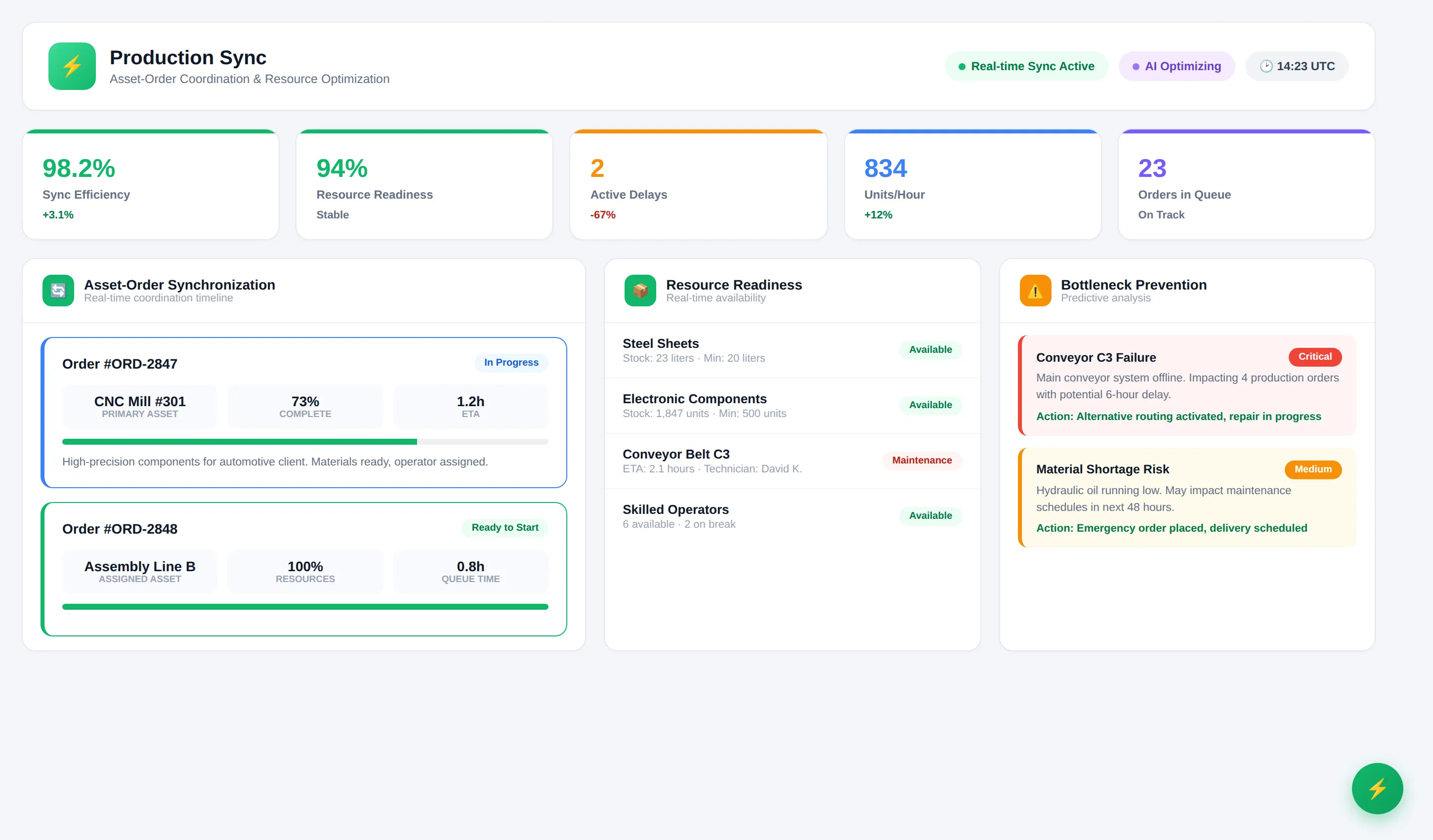
Coordinate equipment availability with production requirements. Ensure resources are ready when needed to minimize delays and maximize throughput.
- Resource readiness: Monitor equipment status and material availability in real-time.
- Schedule optimization: Adjust production plans based on asset availability and maintenance needs.
- Delay prevention: Identify potential bottlenecks before they impact production.
Streamline team transitions
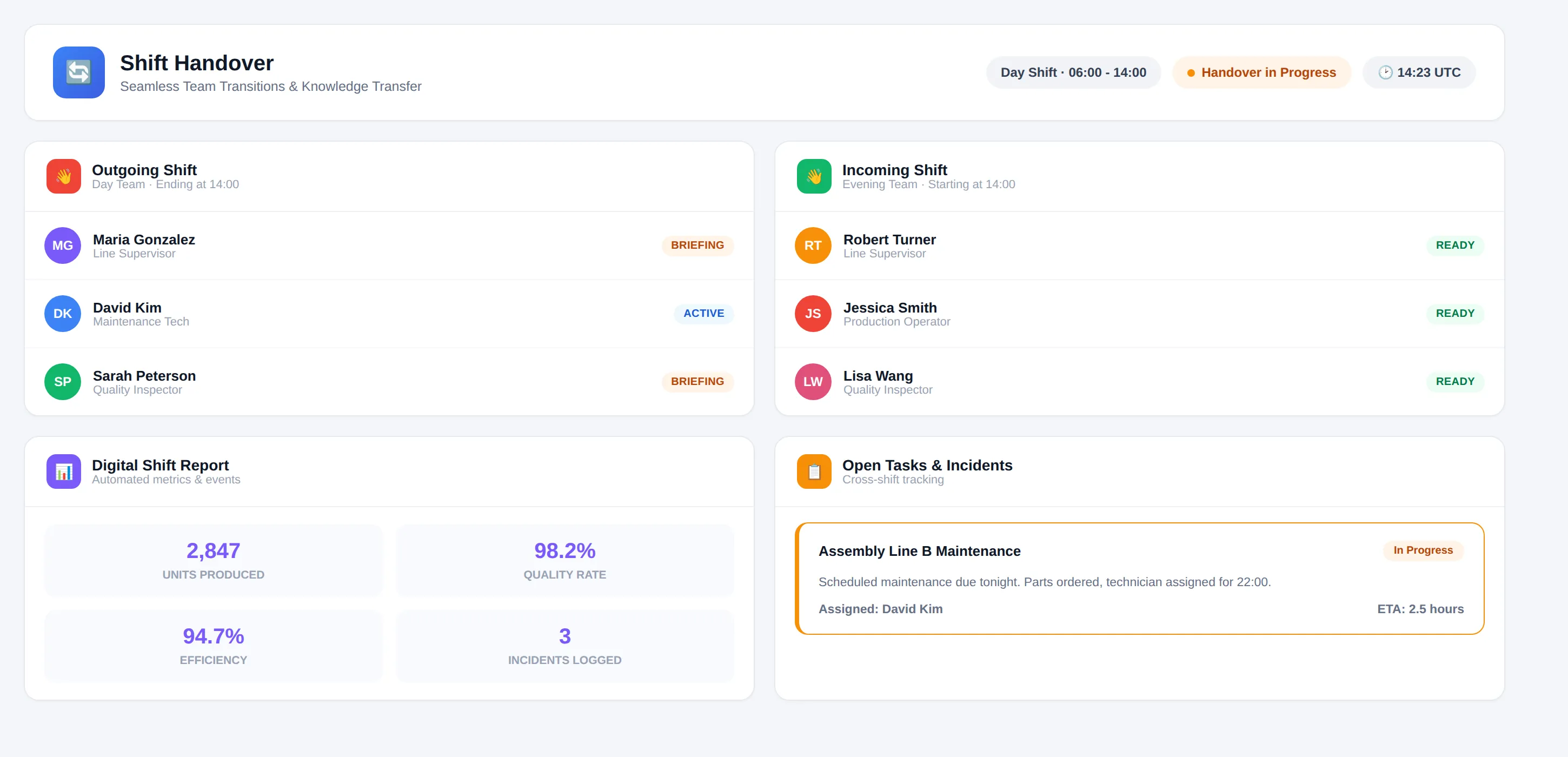
Automate shift handover processes for seamless operations. Ensure critical information transfer between teams while maintaining productivity.
- Digital reporting: Generate comprehensive shift reports with key metrics and events.
- Status tracking: Monitor open tasks and incidents across shift changes.
- Knowledge transfer: Ensure consistent information flow between incoming and outgoing crews.
Drive continuous improvement
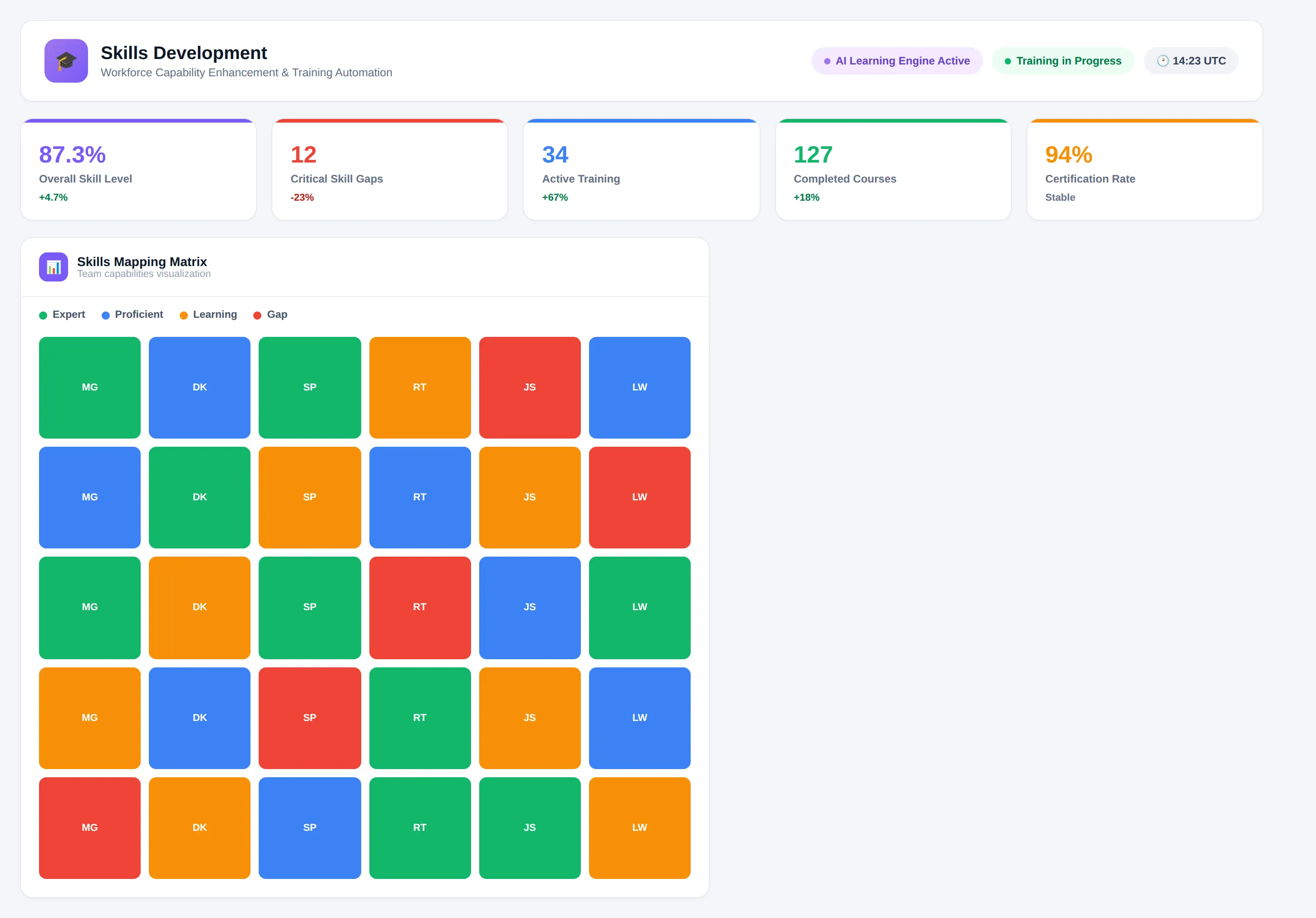
Track and develop workforce capabilities systematically. Identify skill gaps and deliver targeted training to improve operational excellence.
- Skill mapping: Monitor team capabilities against evolving operational needs.
- Training automation: Deliver personalized learning paths based on performance data.
- Competency tracking: Measure and validate skills development across the workforce.