ML Studio simplifies building, deploying, and scaling AI models
Purpose-built tools for the Industrial ML process workflow lifecycle

Synchronizing machine learning processes with ML Studio
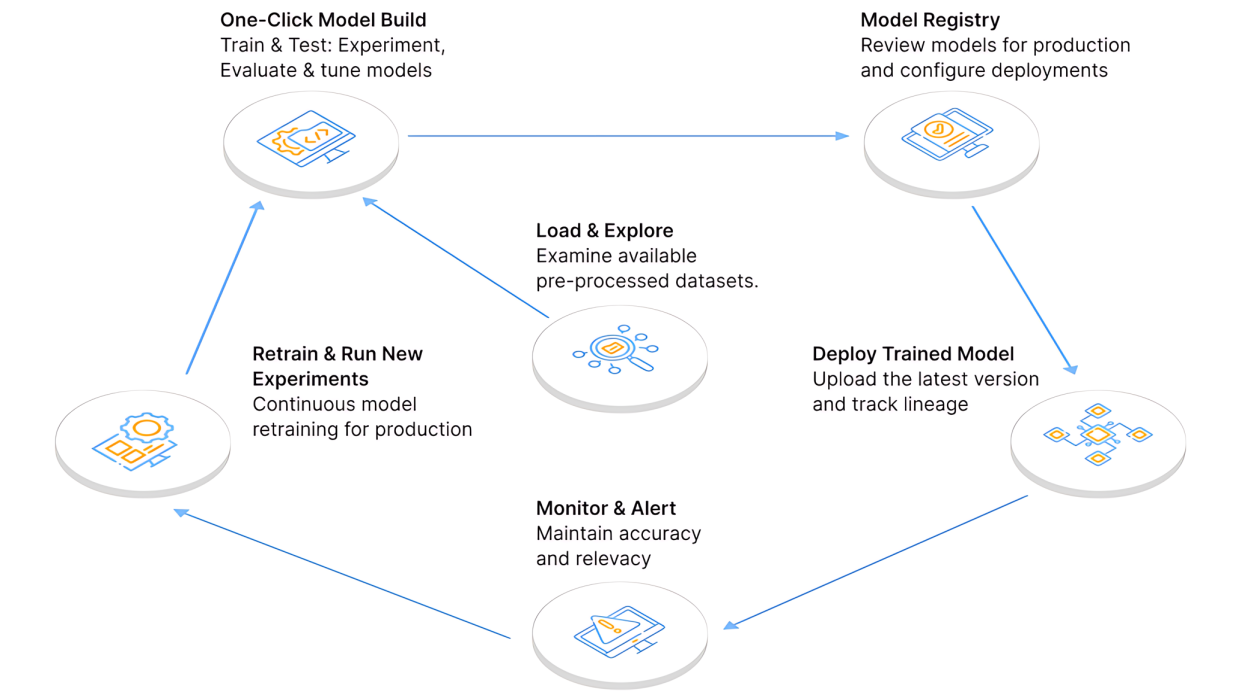
Elevate industrial AI operations. Designed to manage multiple AI model-building projects seamlessly, ML Studio handles implementing diverse datasets and managing various developmental experiments and deployments, ensuring a streamlined management experience. Deploy pre-trained models directly from extensive libraries tailored for industrial applications, or create custom models with ease using Jupyter Notebook integration.
ML Studio harnesses the power of Kubernetes orchestration to enhance machine learning operations. Experience efficient distributed training, precise hyperparameter tuning, and robust production deployment of ML models. This scalable, unified orchestration optimizes
computational resources and simplifies the complex phases of all large-scale ML deployments.
Grouping deployed models by instance enables efficient management at scale, allowing for better organization and accessibility of AI assets and models. This feature is crucial for enterprises aiming to leverage machine learning across multiple systems, providing a clear and organized process framework to boost productivity and streamline operations in industrial and manufacturing environments.
Load and explore data
Ease the management of AI datasets by allowing users to handle raw datasets efficiently by creating subsets with selected features and date ranges. Reuse of datasets stored in IRIS Foundry or directly import training sets, simplifying the data preparation phase of ML workflows. Robust data visualization tools include multi-line, histogram, correlation, and box-plot charting to help users view data trends and identify outliers. Use an intuitive interface with single-click options for exploring data through various methods ensuring usability and deep analytical capabilities, whether the data originates from IRIS Foundry or external sources.
One-click model build
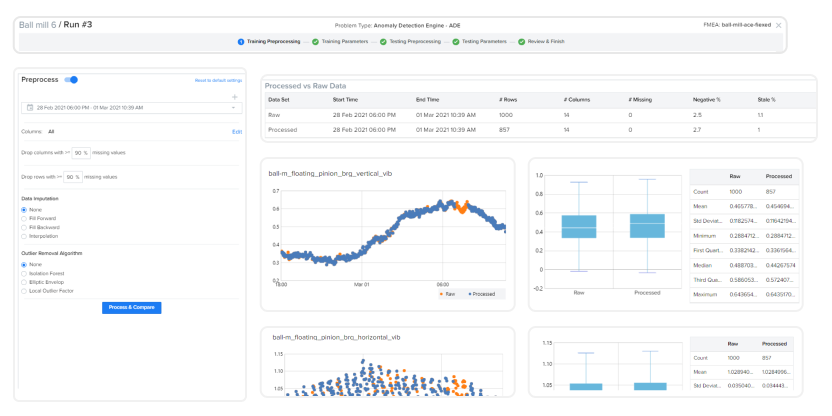
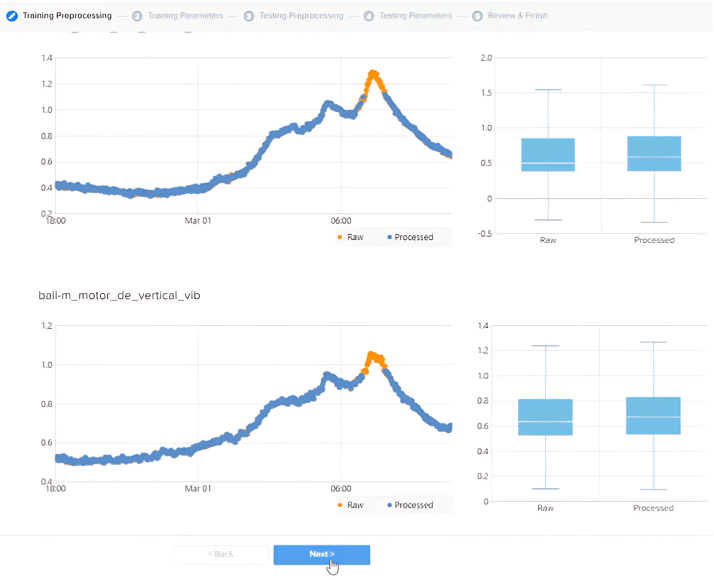
Designed by technical experts in industrial applications, ML Studio facilitates the precise creation and process management required in training datasets for building AI models. Ensure accuracy and efficiency by comparing models against various testing datasets, and support iterative experimentation with different data pre-processing techniques and configuration parameters, making it easy to manage multiple runs and deployments effectively. Uniquely tailored for the industrial sector, ML Studio requires no coding, allowing process engineers and domain experts to harness its capabilities without specialized programming skills.
Model registry
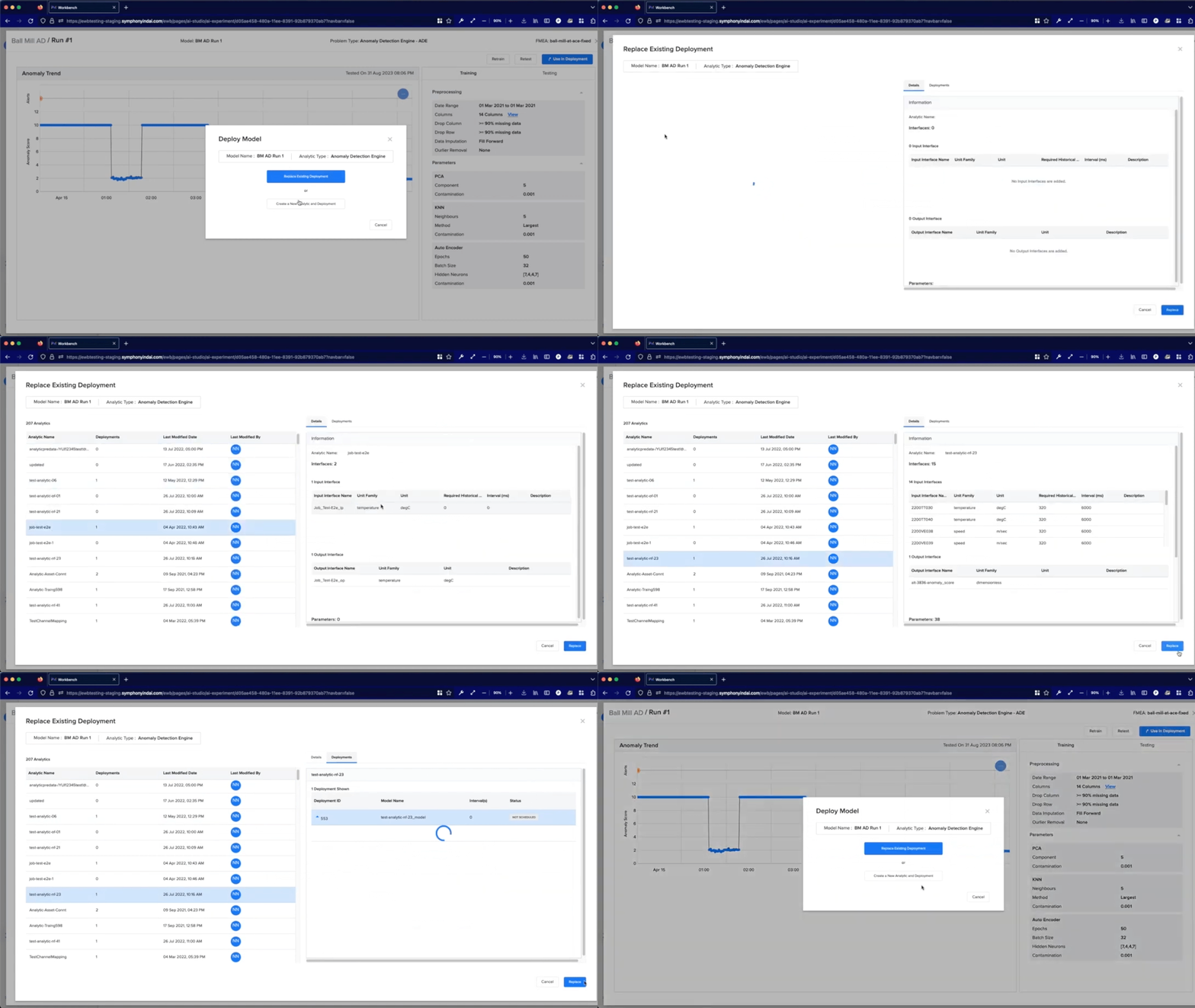
Configure deployments, ensure model accuracy, detect contributing factors, faults, and anomalies within a test environment, and more. The ML Studio model registry maintains a comprehensive record and revision history of models, enhancing transparency and facilitating simplified version history tracking. Duplicate models in the testing phase to assess the impact of changes and fine-tune models for optimal performance upon deployment, ensuring quick and efficient AI integrations.
Deploy trained model
Enhance the deployment, management, and scaling of machine learning pipelines and experiments within a unified environment, significantly reducing the need for manual mappings during scaling processes. AI-powered contextualization automatically aligns data from existing asset models to the required parameters. Additionally, AI-model outputs are readily accessible for integration through an open API, facilitating their use in other applications. This openness extends to accessing insights through SymphonyAI’s purpose-built applications and an open API, ensuring seamless integration with existing applications.
Monitoring and alerting
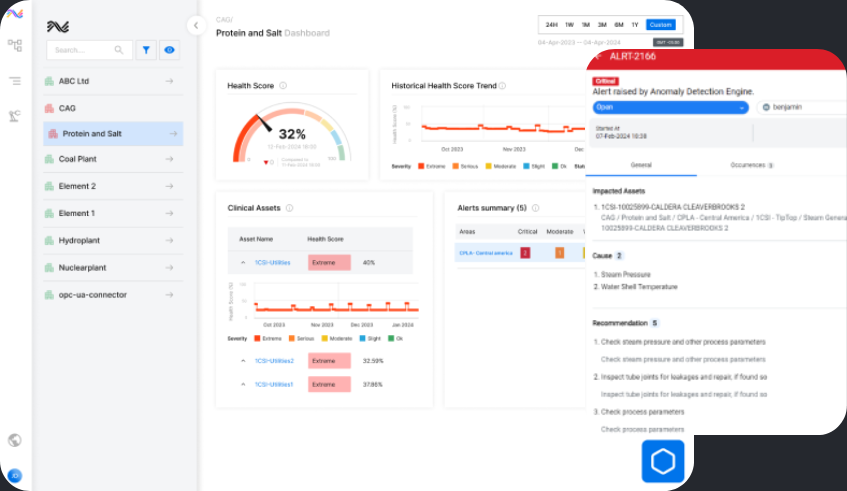
Effortlessly customize alert settings within ML Studio to suit specific needs and industrial use cases. Tailor alert windows and thresholds based on metrics such as data volume and required data points, ensuring timely notifications that match criticality, severity, and volume criteria. Prevent alert fatigue by implementing silent modes that regulate alert frequency during specific events, enhancing user experience. Produce AI models designed for industrial users, offering reliability and trustworthiness, and delivering actionable insights while mitigating alert overload.
Retrain and iterate
Iteratively refine model performance by seamlessly integrating new data into the retraining process. Users can initiate model retraining through a streamlined interface, ensuring their models evolve alongside changing data distributions and trends, enhancing predictive accuracy and reliability over time. IRIS Foundry allows for seamless updates or new deployments tailored to specific industrial use cases, providing the agility to adapt to evolving business requirements and market dynamics.
ML Studio Demo
Check out our video demo showcasing ML Studio: an industry-tailored, no-code, self-service environment. Experience how it simplifies building, deploying, and scaling AI models, with purpose-built tools for the Industrial ML process workflow lifecycle.
Explore all products
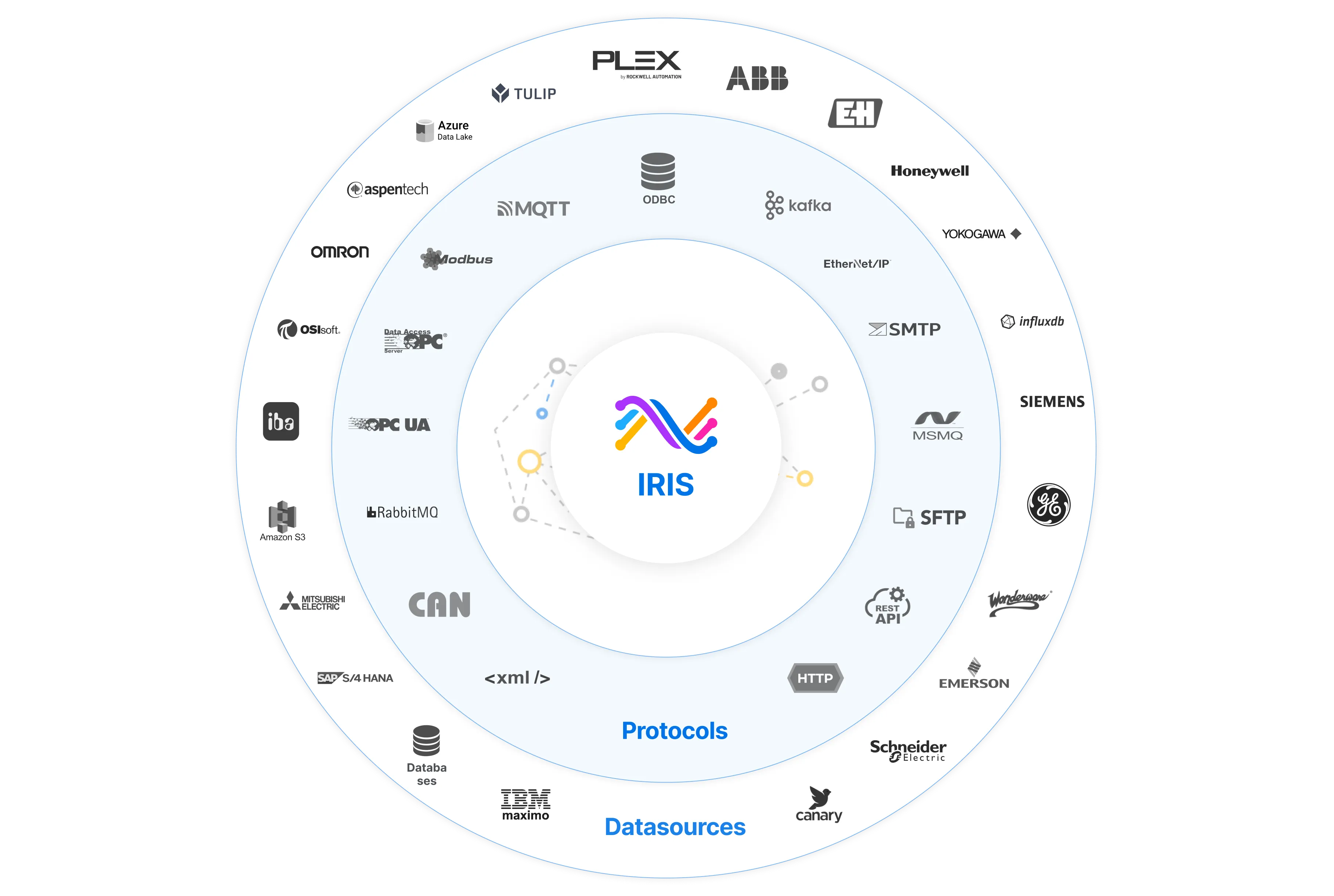
IRIS Foundry provides data connections, orchestration, unification, and AI modeling to enhance manufacturing efficiency, productivity, and improved decision-making through advanced analytics and machine learning.
Predictive Asset Intelligence uses AI to monitor asset health, prevent unplanned downtime, and optimize performance while leveraging real-time data, predictive models, and actionable alerts for proactive maintenance across industrial environments.
.png)
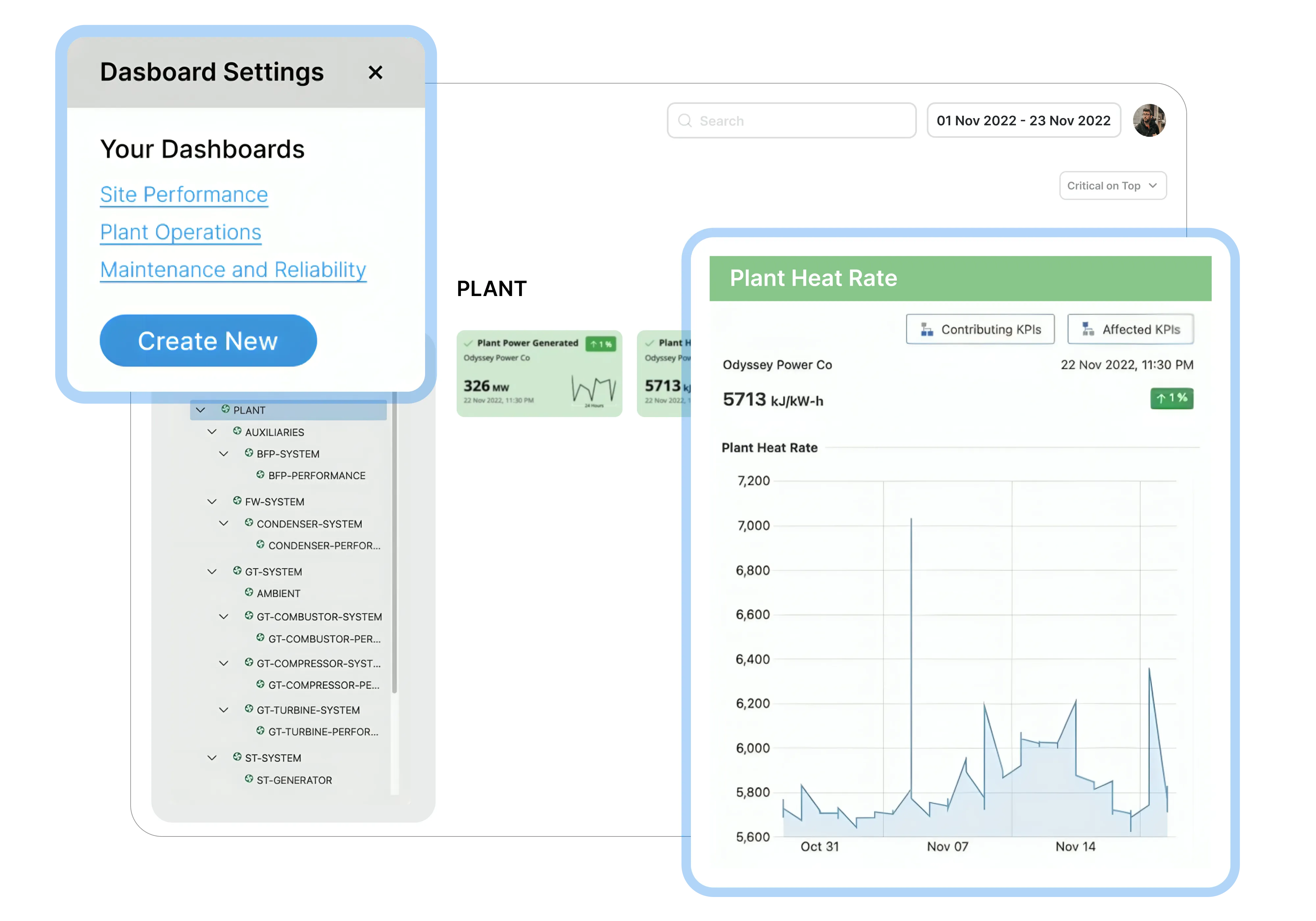
Out-of-the-box analytics that deliver real-time AI-powered monitoring of key performance indicators (KPIs) to enhance plant operations, predict equipment issues, optimize efficiency, and provide actionable insights with no-code analytics and customizable tools.
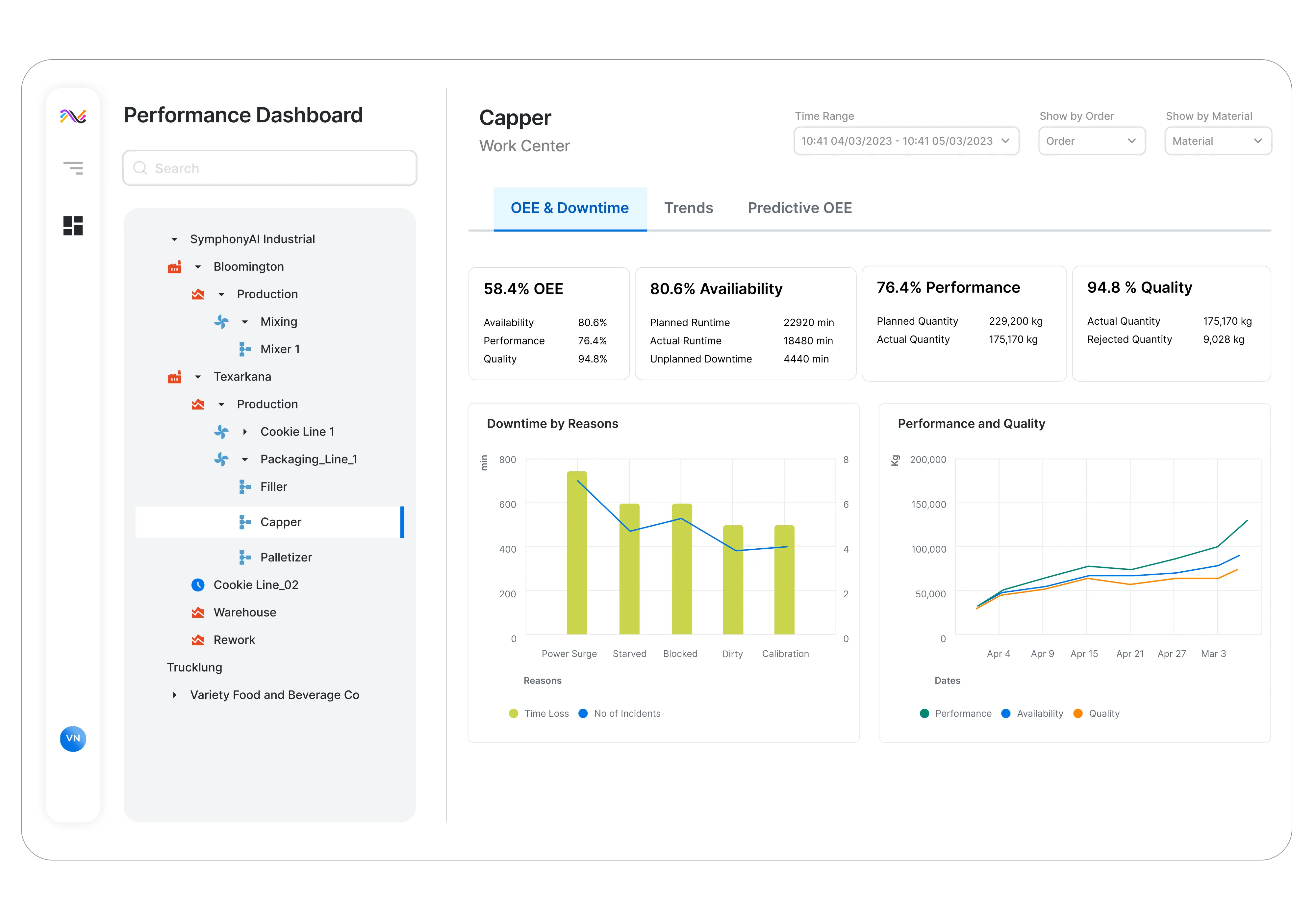
AI-driven operations management, real-time monitoring, and predictive analytics significantly reduce cycle times, waste, and production costs while improving product quality and resource allocation.
Digital work instructions, inspections, alerts, and workflows accessible via mobile devices, ensuring process uniformity and real-time data traceability for operational excellence and compliance.
.webp)