Digitally Enabled Reliability
Plant Managers are struggling to produce enough product and to find enough qualified resources to maintain their plants. Over the years maintenance staffs have been cut back to the point where there aren’t enough resources to complete all the work orders and preventative maintenance tasks.
Many plants complete less than 75% of the preventive maintenance tasks each month because the tasks are based on time and not on data from the plant floor. In some plants the decision on which maintenance to perform is up to the discretion of the maintenance technician. Worse, condition-based monitoring for maintenance is configured in Excel spreadsheets — if at all.
Why? Maintenance, operations, engineering, process control and IT must collaborate to design an integrated maintenance system with both OT and IT governance. This is a big ask. Each group is resource constrained and perceive the integration as additional work that they don’t have time for.
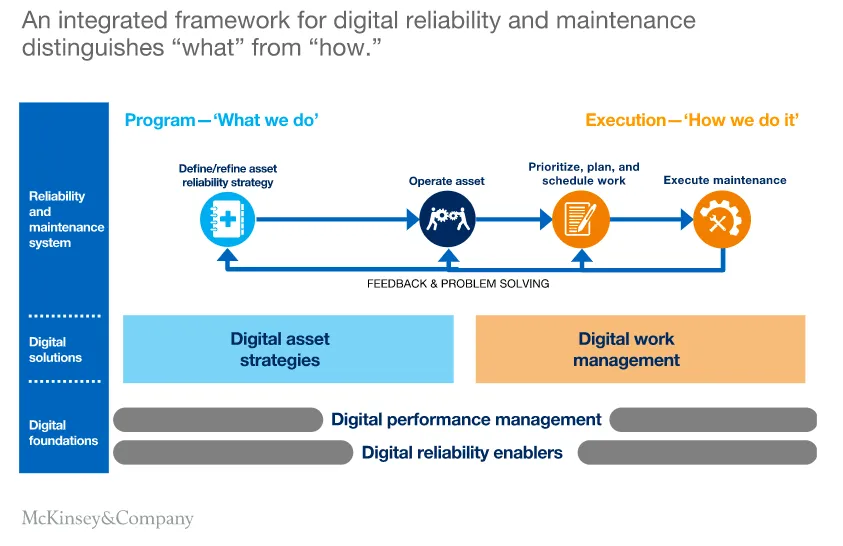
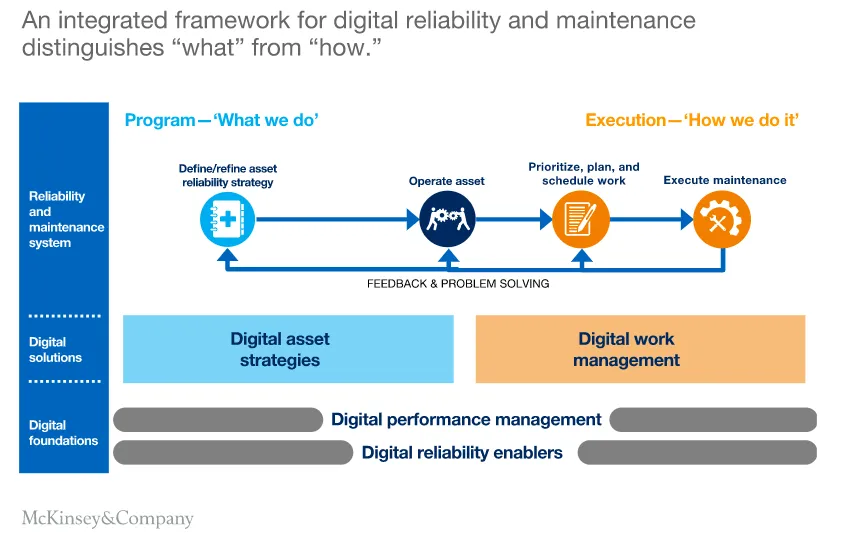
What can overcome these objections? An easy to use, logically configured and easily maintained digital platform is required to tie together all the disparate maintenance systems – CMMS, condition monitoring, control system data, machine learning applications and advanced analytic systems. The benefits for implementing this digitally enabled maintenance system can increase asset availability from 5 to 15 percent and reduce maintenance costs by 18 to 25 percent.1
McKinsey & Company published an article that recommends new digital tools “to accelerate and standardize the cost-benefit analyses and decision-making that underpin maintenance and reliability activities. Digital asset-management tools, for example, help reliability teams plan and manage repair or replacement choices over the lifecycles of individual assets or entire fleets.”
Contact SymphonyAI Industrial if you want to explore solutions that we have delivered.
1. Steve Bradbury, Brian Carpizo, Matt Gentzel, Drew Horah and Joel Thibert. 2018. Digitally enabled reliability: Beyond predictive maintenance. McKinsey & Company