Anti-money laundering: the complete guide
Money laundering is a significant challenge worldwide, enabling criminals to disguise illegal funds as legitimate earnings. Regulated industries, including financial services, insurance, gaming, and more, understand the role of AML software in effective anti-money laundering (AML) efforts. This guide explores key questions: what is money laundering and why are anti-money laundering efforts important? It also explores how AML software acts as a key tool in the fight against financial crime.

What is anti-money laundering?
Anti-money laundering refers to laws, regulations, and procedures designed to prevent income-generating illegal activities, including drug trafficking, fraud, and corruption. Anti-money laundering efforts detect, disrupt, and deter financial crime by ensuring illicit funds cannot be disguised as legitimate.
Systems and software catch criminals involved in money laundering and protect the integrity of financial institutions and the global financial system. Without strong and advanced anti-money laundering measures, criminal organizations fund illegal activities—threatening economic stability and public safety. Anti-money laundering is often described alongside counter terrorist financing as AML/CTF.
Why is anti-money laundering important?
Financial crime costs trillions of dollars annually. According to the 2024 Global Financial Crime Report, $3.1+ trillion flowed through 2023’s financial system. Criminals involved in money laundering target banks, insurance companies, and other financial services with complex money laundering schemes.
Anti-money laundering efforts protect regulated institutions from severe, growing penalties from regulators. Banks that didn’t meet AML compliance requirements in 2023 paid $6.6 billion in fines, and faced reputation damage and potential shutdown.
Anti-money laundering efforts protect funds—and people. Failing to intervene before or during the stages money laundering facilitates dangerous criminal profiteering, human trafficking, and terrorism. Anti-money laundering stops criminal activity and protects society at large.
A timeline of anti-money laundering laws




Money laundering and making illegally-obtained money appear legitimate has been a decades-long concern. However, countries did not put laws into place until the 1980s and 1990s. Anti-money laundering legislation, such as the United States’ Money Laundering Control Act, passed in 1986.
In 1989, the Financial Action Task Force (FATF) was formed by major countries to create anti-money laundering global standards and prevent money laundering worldwide. In 2000, the group began to publicly identify countries with weak anti-money laundering laws to encourage improved efforts to combat crime.
Technological advancement has made fast, online money transfers commonplace, and anti-money laundering efforts more challenging. Countries continue to evolve, such as the EU’s AMLA (Anti-Money Laundering Authority). Its efforts strengthen the fight against money laundering and terrorism financing.
Who do the anti-money laundering laws apply to?
The US government states that all money laundering provisions apply to, “all US persons and all foreign persons.” Anti-money laundering legislation doesn’t just lead to the prosecution of criminals—people and businesses that facilitate the transfer of illicit funds can also be held responsible for money laundering.
Financial workers in banks and financial institutions, and those providing professional services such as lawyers and accountants, can be held liable for money laundering. In-place anti-money laundering processes must be strong enough to prevent crime. Other industries, such as the gaming sector and insurance must also enforce anti-money laundering efforts.

Know Your Customer and Customer Due Diligence
KYC/CDD ensures customers are who they claim to be as they sign up with a financial institution. An ongoing process, it should be revisited regularly (perpetual KYC) to evolve with an organization’s risk profile and support anti-money laundering efforts. Higher-risk customers often require additional vetting, or enhanced due diligence to prevent money laundering.

Anti-money laundering transaction monitoring
Identifying unusual or suspicious activity by monitoring the incoming and outgoing transactions of customers. If the software detects something, a financial crime investigator can look into the alert, and if concerned, send a suspicious activity report (SAR) to the relevant authorities.

Sanctions screening
Sanctions screening ensures clients and customers are not featured on government watchlists. It also enables financial institutions to ensure client payments are not going to or coming from sanctioned individuals, companies, or countries.
What features make anti-money laundering software effective?
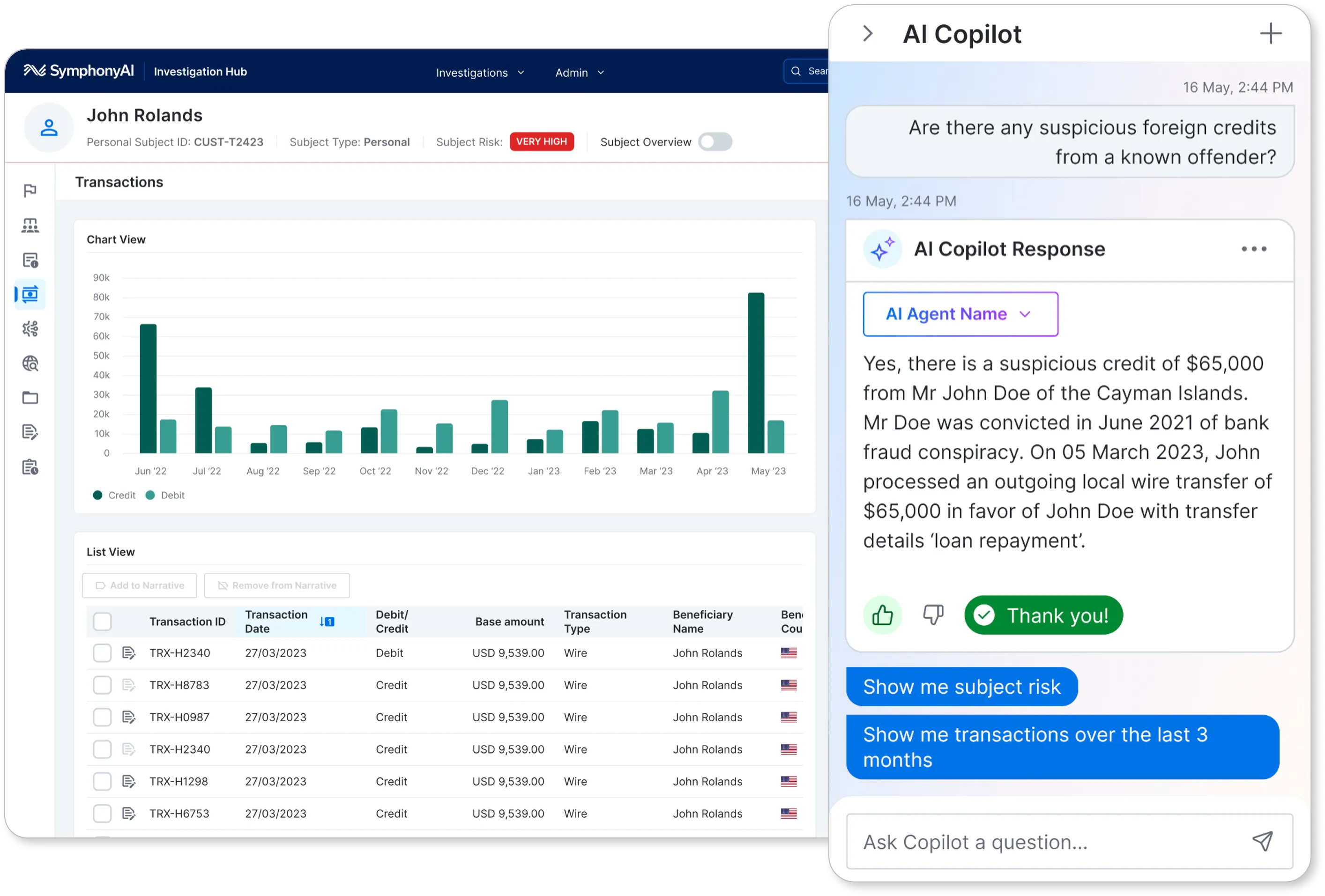
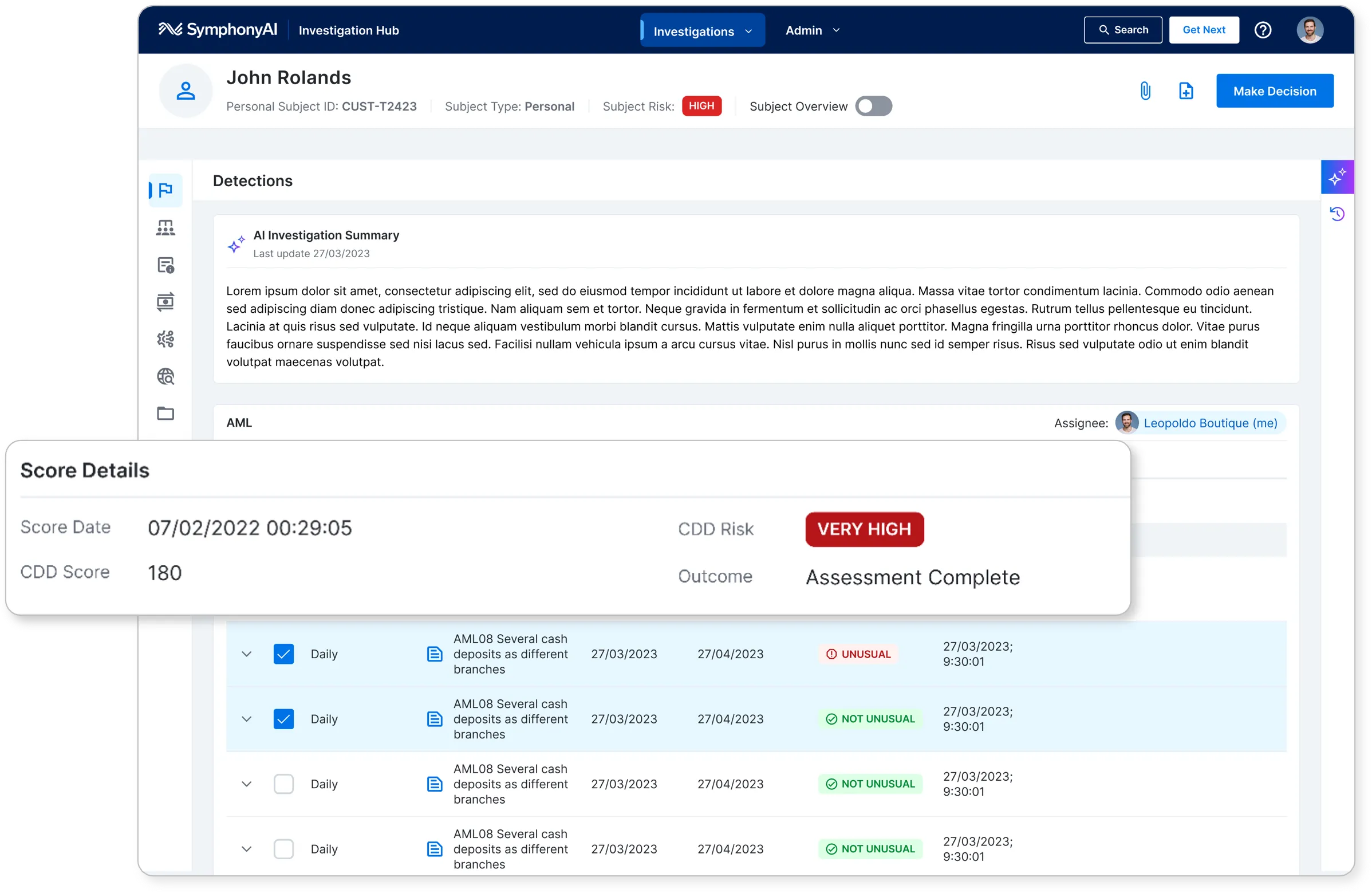
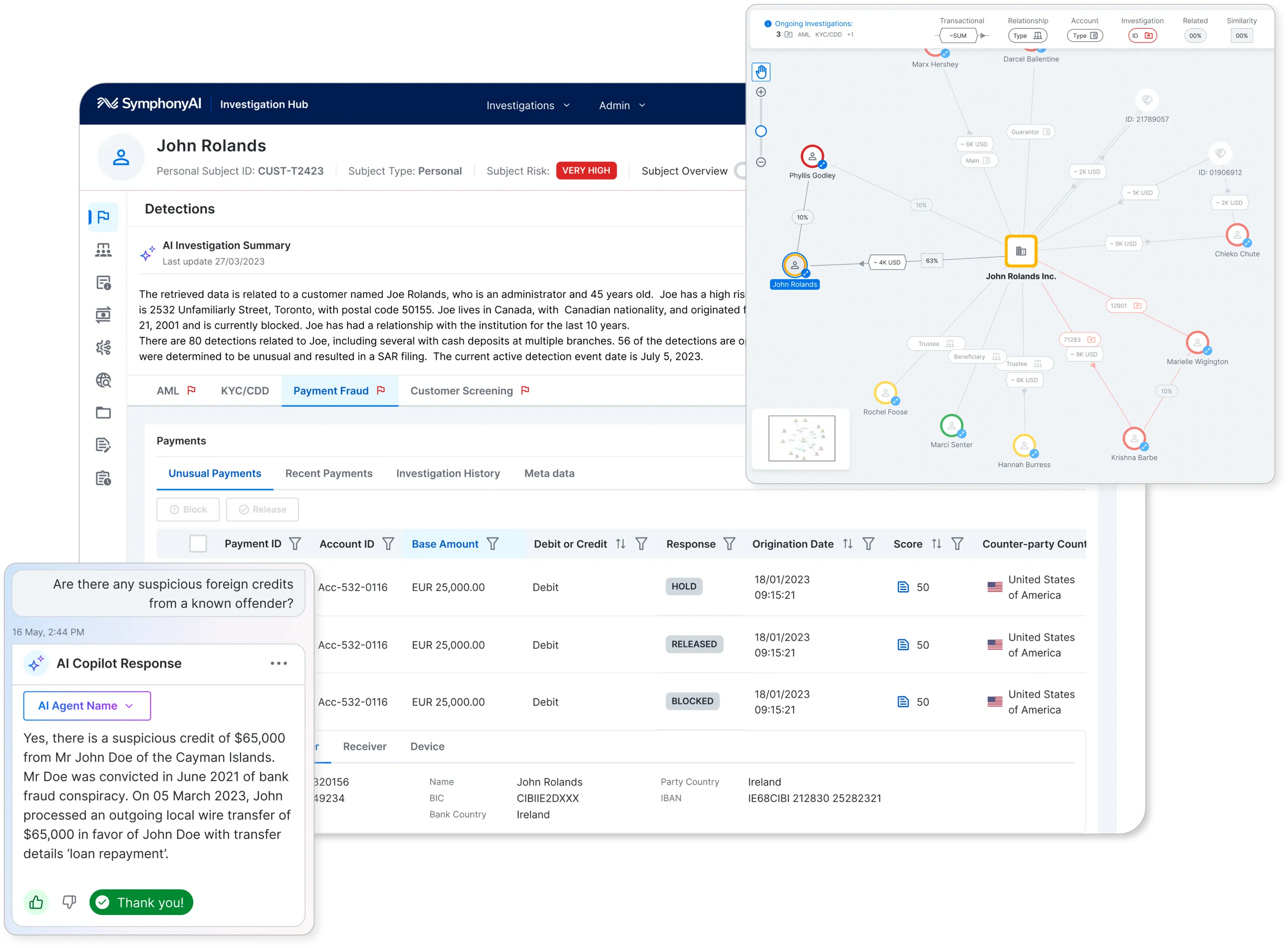
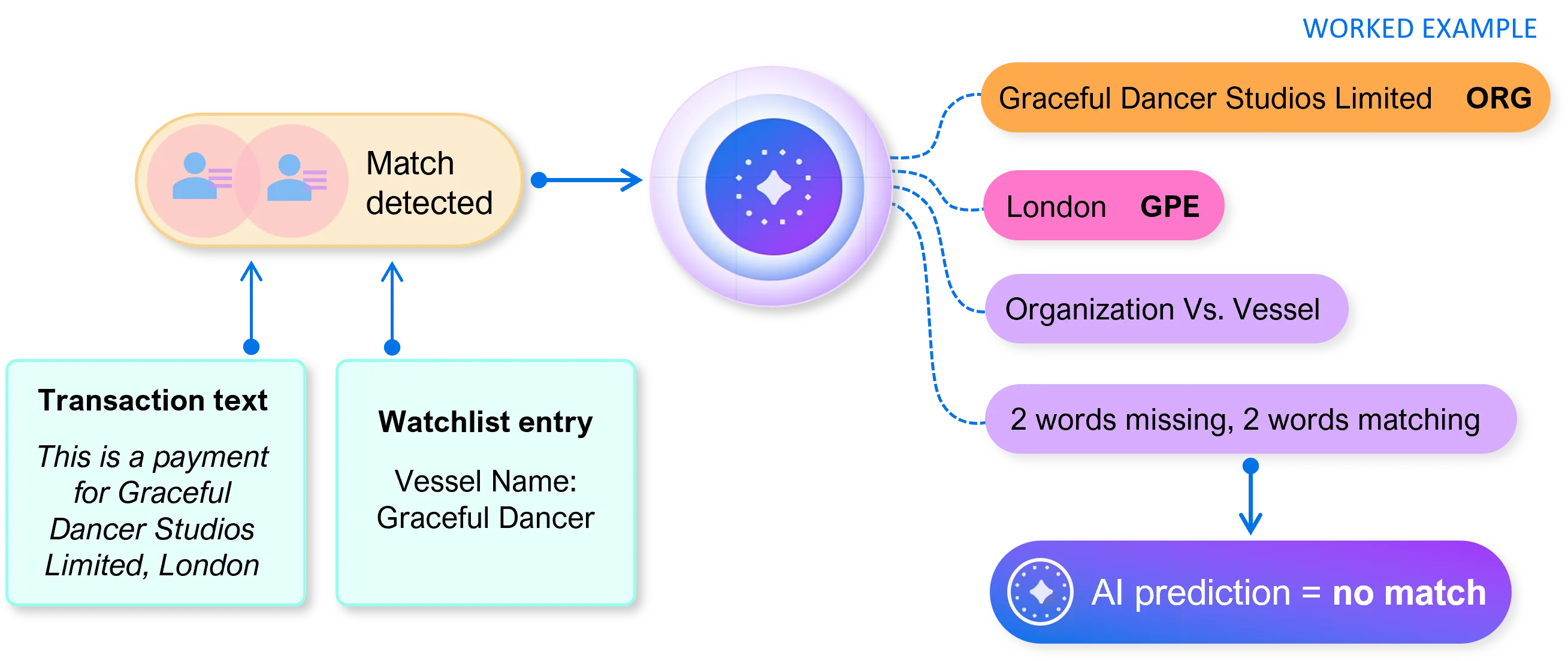
Anti-money laundering software continuously monitors transactions in real-time, using predefined rules and AI to flag unusually large transfers, high-risk destinations, sudden account changes, and other questionable activity.
Using KYC and CDD, anti-money laundering software assigns risk scores to customers based on factors including geographic location, transaction history, and industry. High-risk customers undergo enhanced due diligence to prevent potential abuse and meet KYC requirements.
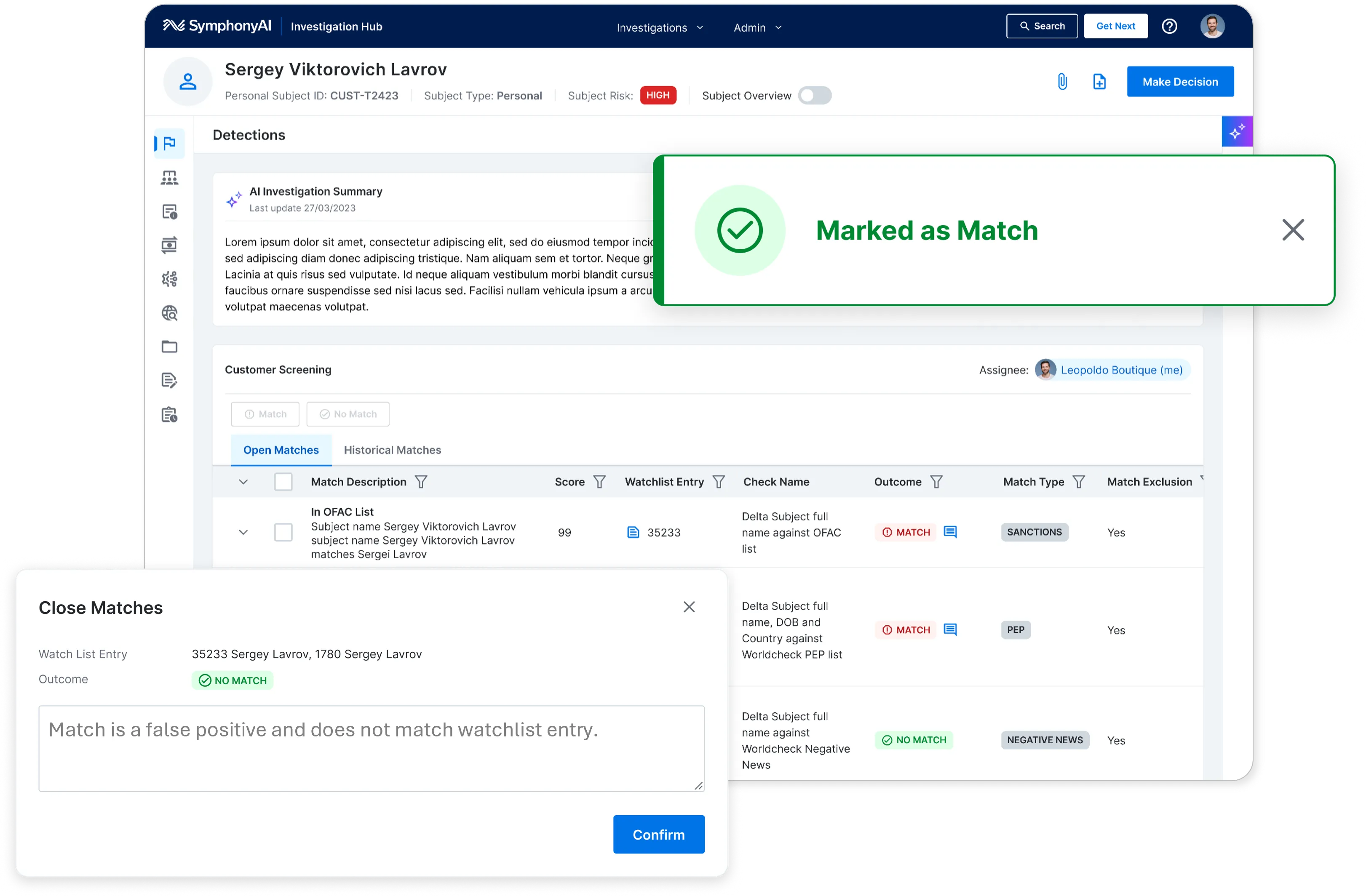
As part of anti-money laundering requirements, financial institutions must understand know your customer principles and ensure they’re not doing business with individuals or entities on sanctions lists or watchlists. Anti-money laundering software automates this by screening customers against updated lists from regulatory bodies like the Office of Foreign Assets Control (OFAC) in the US.
Anti-money laundering software streamlines the filing of SARs, ensuring compliance with local and global regulations. SymphonyAI’s Sensa Investigation Hub uses generative AI to help institutions fight money laundering by automating report writing.
Modern anti-money laundering software uses AI to evolve and improve. It learns from historical data to detect new types of suspicious activity. SymphonyAI’s SensaAI for AML and SensaAI for Sanctions use machine learning and AI to improve efficiencies.
What are the benefits of anti-money laundering processes?

Customers inherently trust institutions that take proactive steps to prevent financial crime, as it demonstrates a commitment to protecting their assets and maintaining the integrity of the financial system. By taking anti-money laundering commitments seriously through the use of advanced software, financial institutions play a vital role in maintaining customer trust and fostering long-term relationships.
A dedication to anti-money laundering processes prevents fraudulent activities and sends a clear message to customers—their financial well-being is a top priority for the institution. As a result, customers are more likely to engage in a broader range of services, recommend the institution to others, and remain loyal. Ultimately, this contributes to the organization’s growth and reputation in an increasingly competitive financial landscape.

Anti-money laundering efforts are crucial for maintaining global economic stability and security. The fight against money laundering safeguards the integrity of financial systems. Efforts prevent funds from being used for illegal activities, including terrorism, drug and weapons smuggling, and human trafficking. By implementing strict monitoring and reporting procedures, financial institutions better detect and prevent suspicious transactions, making it increasingly difficult for criminals to launder illicit funds.
Beyond individual banks or countries, a compromised financial system in one region can have far-reaching consequences and potentially destabilize economies worldwide. A protective, robust anti-money laundering framework fosters trust in financial institutions, encourages legitimate business activities, and supports the overall health of the global economy.

By identifying and reporting suspicious activities, anti-money laundering software provides valuable intelligence to law enforcement agencies charged with dismantling global criminal networks. For instance, entity resolution software can resolve disconnected data to better understand the workings of criminal gangs.
The sophisticated analytics and pattern recognition capabilities of modern anti-money laundering systems uncovers complex schemes. Rather than going undetected, law enforcement agencies receive crucial leads and evidence for investigations. The powerful synergy of anti-money laundering efforts and law enforcement enhances crime-fighting initiatives, leads to successful prosecutions, and disrupts criminal enterprises.

.svg)
What is the future of anti-money laundering?
Anti-money laundering is in a constant state of evolution—and so is technology. The sophistication of financial crime and the methods used to prevent it must keep pace as technology advances. The future of anti-money laundering will likely include:



Generative AI, predictive AI, and machine learning are constantly improving, making detection faster and more accurate. Agentic AI developments are also gaining momentum, with AI agents able to carry out specific tasks and communicate with one another to improve productivity, combat financial crime, and offer advice to human agents.
Tracking cryptocurrency transactions to prevent money laundering and fraud is likely to gain pace. Although trading cryptocurrency is not illegal, transactions and ownership are difficult to track, making it a popular commodity for money laundering.
Facilitating better collaboration between institutions and regulators will be key. By breaking down silos and improving communication, organizations can improve processes and become more effective at preventing financial crime.
Discover the value of SymphonyAI’s anti-money laundering solutions
Invest in modern anti-money laundering software to improve compliance. Learn more about SymphonyAI’s full financial crime prevention suite and support for anti-money laundering efforts.
Anti-money laundering FAQs
The team at SymphonyAI is here to answer your questions about financial crime prevention and our solutions. Here are some of the most common.

Anti-money laundering (AML) includes laws, regulations, and procedures aimed at preventing criminals from disguising illegal funds as legitimate earnings. It ensures that illicit funds cannot be integrated into the financial system.
Why is anti-money laundering important?
Anti-money laundering is crucial to protect financial institutions, prevent the funding of illegal activities, and maintain global economic stability. Failing to comply with AML regulations can lead to severe penalties and reputational damage for financial institutions.
Key challenges for anti-money laundering compliance solutions include handling large data volumes, adapting to evolving criminal tactics, and meeting diverse global regulatory requirements.
Countries have their own AML laws and regulations, and they apply to everybody. Many sign up to the Financial Action Task Force (FATF), a global organization to help combat money laundering, with worse performing countries encouraged to improve their efforts. The EU is launching their own anti-money laundering organization, AMLA, in 2025.
Anti-money laundering software is technology that automates processes like transaction monitoring, customer risk assessment, and regulatory reporting to help financial institutions comply with AML regulations.
Anti-money laundering software typically includes transaction monitoring, customer risk rating using KYC/CDD, sanctions screening, and regulatory reporting. Modern products will also feature machine learning and AI for improved detection and enhanced productivity.
Anti-money laundering software helps manage data efficiently, improves accuracy in detecting suspicious activities, adapts to new threats, and ensures compliance with evolving regulations.
Modern anti-money laundering software uses AI and machine learning to analyze historical data, adapt to new threats, and reduce false positives in suspicious activity detection.
Anti-money laundering compliance protects the financial system, builds customer trust, and supports law enforcement in dismantling criminal networks.
Considerations when exploring the top anti-money laundering software for financial institutions include scalability, configurability, integration capabilities, and ongoing support to meet compliance and operational needs.
The future of anti-money laundering includes enhanced AI capabilities, blockchain analysis for cryptocurrency monitoring, and improved global data sharing for better collaboration.
SymphonyAI provides a full financial crime prevention suite, which includes AML transaction monitoring, KYC/CDD, sanctions screening, and payment fraud. We can also centralize and unify a risk and compliance tech stack and offer AI overlays for AML and sanctions screening. Contact us to learn more.