Predict equipment failures before they stop production
Every unplanned stoppage starts as a small change in vibration, temperature, pressure, or load. Predictive Asset Intelligence flags it days before failure, explains the likely cause, and puts the right maintenance action in front of your team, using the plant data you already collect.
Calendar-based maintenance misses the failures that matter
Preventive schedules replace parts that still have life in them and miss the bearing that degrades between inspections. The warning signs are there, but they are scattered across historians, computerized maintenance management system (CMMS) work orders, vibration routes, and operator logs. Predictive Asset Intelligence brings that evidence together so your reliability team maintains on condition, not on the calendar.
From first signal to finished work order
Predictive Asset Intelligence runs as one continuous loop on IRIS Foundry: model the assets, watch them, explain what is changing, and act before anything fails.
More than 100 pre-built connectors bring in data from the systems you already run, including AVEVA PI System, AspenTech, SAP, SCADA, and your CMMS, so nothing gets replaced. Cortex links each asset to its hierarchy, failure modes, and process relationships, drawing on more than 80,000 asset templates with embedded failure mode and effects analysis (FMEA) libraries.
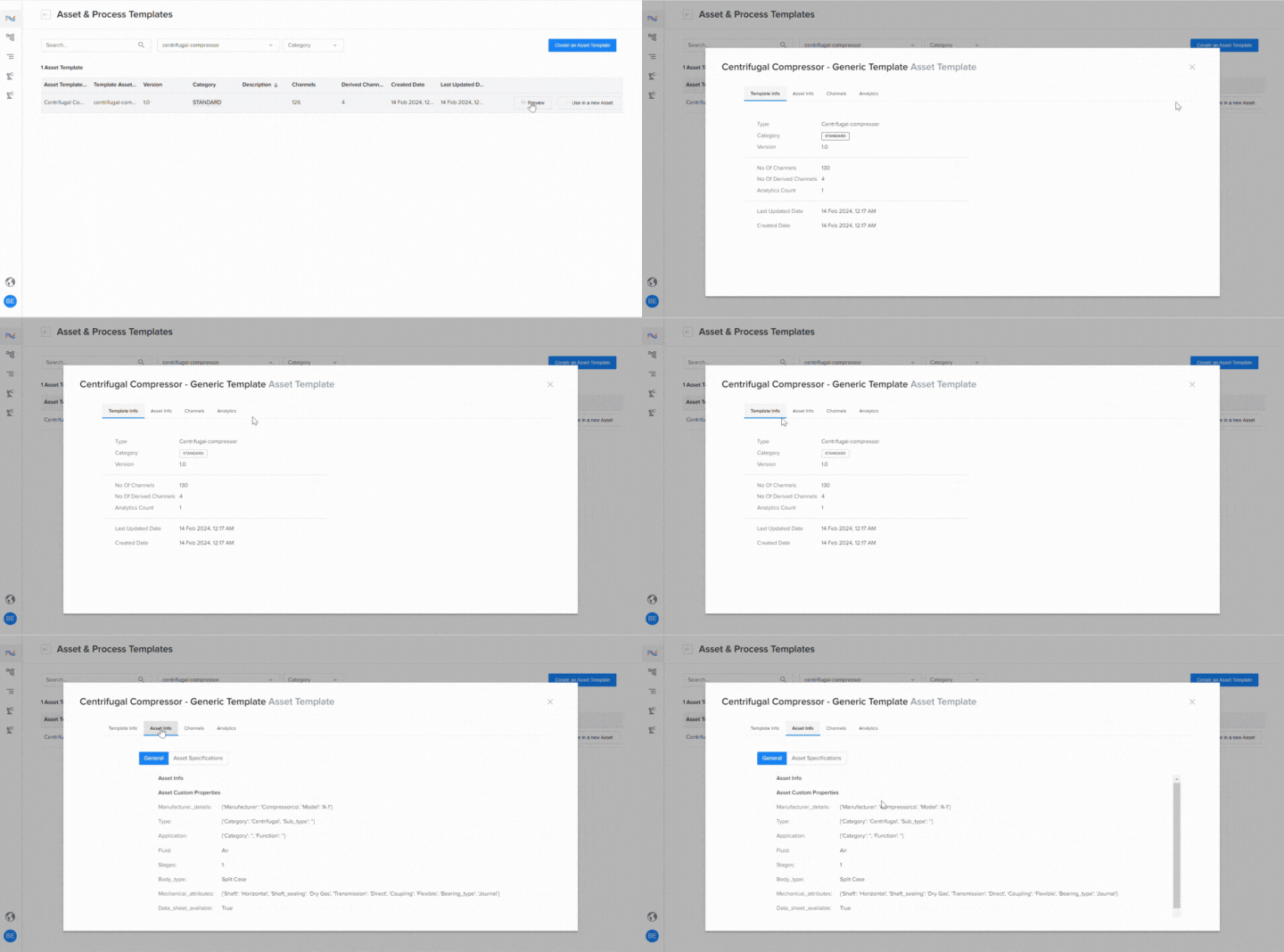
Multi-modal anomaly detection reads vibration, process, and operating-context data together, so it tells a developing fault apart from a change in load. Models flag anomalies days before failure, while there is still time to plan the repair around production.
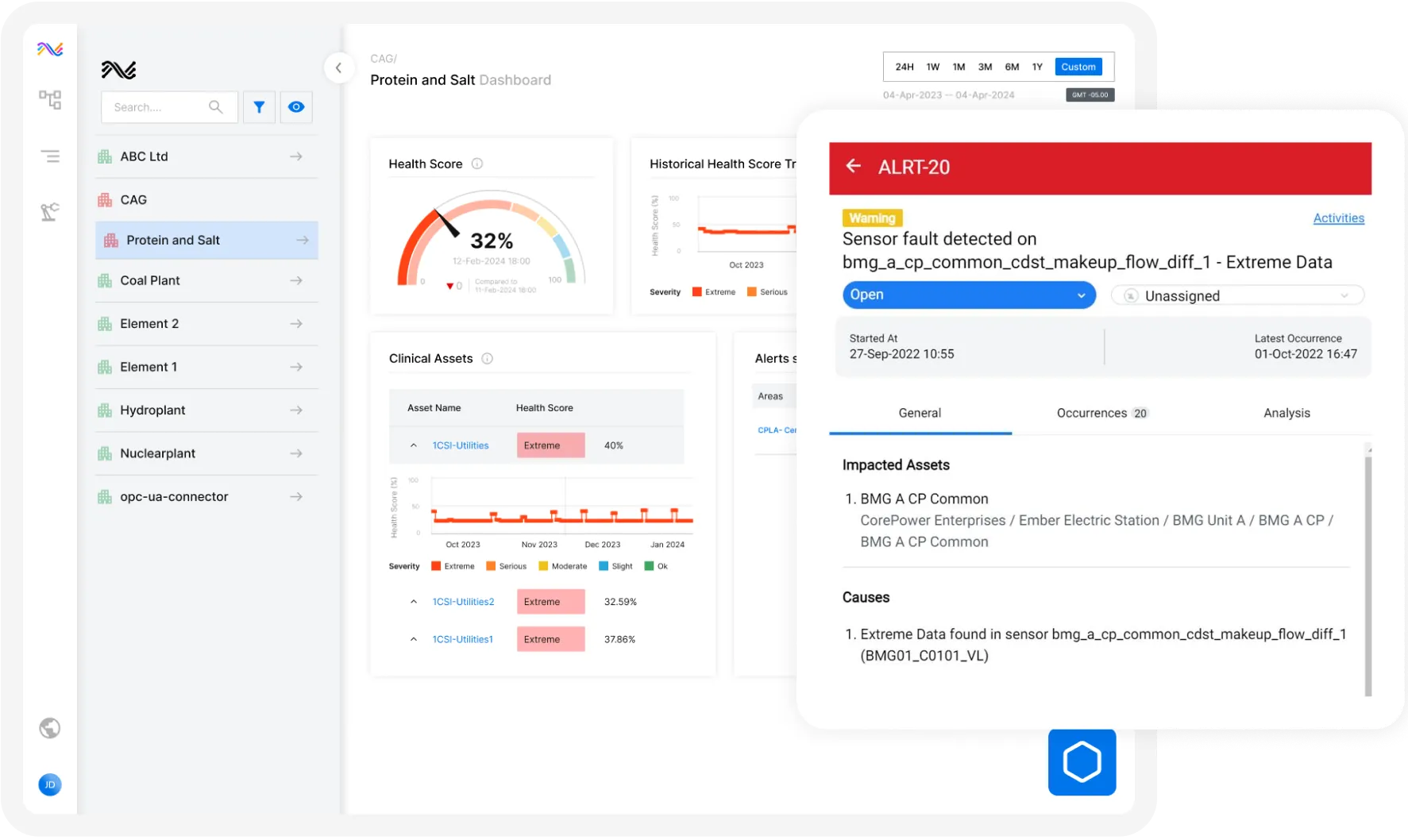
Machine reasoning combines data patterns with built-in equipment physics to map each anomaly to a failure mode and pinpoint the root cause in minutes instead of days, then recommends the fix. Engineers ask the Industrial Copilot about any alert in plain language and see the evidence behind the answer.
IRIS Flows maintenance agents connect asset health scores to your work order system and schedule the intervention based on failure probability, under the level of autonomy your team sets. When a site needs its own reliability view, engineers build it in IRIS Forge from a natural-language prompt.
Maximize uptime and production rates
Less unplanned downtime, as teams fix developing faults before they stop production.
Output gain from the same assets and crews.
Nippon Gases supplies production-critical and safety-critical industrial gases in more than 13 countries. Its reliability team already relied on vibration and oil analysis, but those methods don't cover every failure mode. On the first critical assets, Predictive Asset Intelligence detected significant anomalies that traditional condition-based monitoring would have missed, adding to the existing program instead of replacing it.
Read the case study“Using predictive AI models from SymphonyAI integrated with critical data sources, we have already been able to proactively detect anomalies and prevent unplanned stoppages.”
Where reliability teams put it to work
Start with the assets that cost you the most when they stop, reach first value within 12 weeks, then extend the same models across lines and sites.

Rotating equipment health
Monitor compressors, turbines, pumps, and motors continuously and catch developing faults while there is still time to plan the repair around production.

Critical process equipment
Watch purifiers, heat exchangers, and other process assets where a slow drift in performance turns into lost output or off-spec product.

Alert triage and root cause
Every alert arrives with the likely failure mode, the evidence behind it, and a recommended action, so engineers spend their time on fixes instead of sorting through alarms.

Condition-based maintenance planning
Forecast how asset condition will trend and schedule repairs, parts, and crews around production windows instead of the calendar.

Fleet-wide reliability
Compare asset health across plants in one view, see which sites carry the most risk this week, and roll proven models out to the next site.

Remote and edge sites
Run models at the machine for remote sites or sites where operational technology (OT) is isolated, and roll results up to the cloud for fleet-wide analysis.
Built for asset-intensive industries
A closer look at four of the industries we serve. Predictive Asset Intelligence applies across all nine, and you can find the apps and agents built for yours in the Industrial AI Solutions library.
Keep compressors, heat exchangers, pumps, and reactors running in continuous processes, where one trip means lost output, off-spec product, and a slow restart.
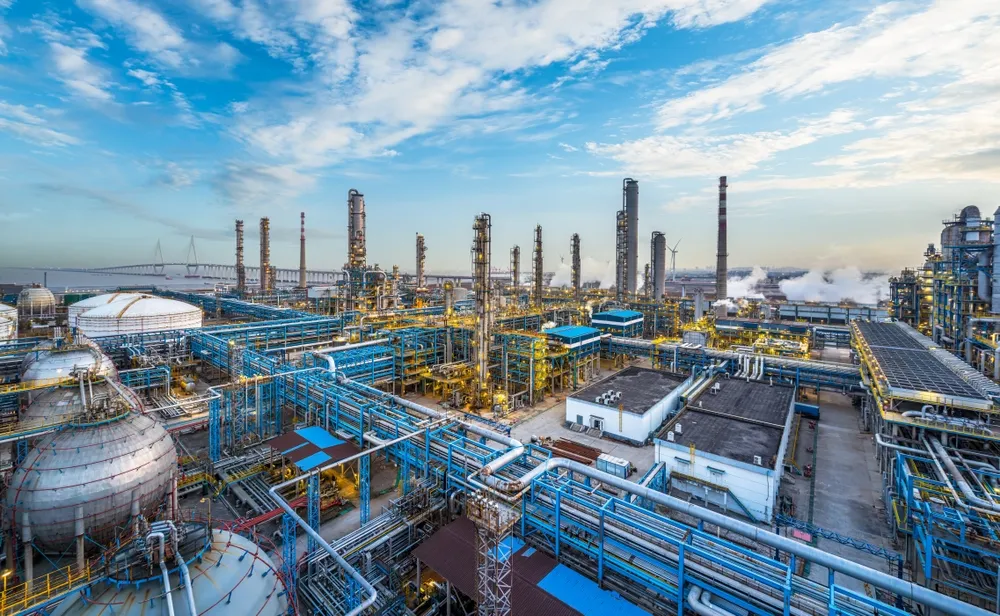
Keep compressors, heat exchangers, pumps, and reactors running in continuous processes, where one trip means lost output, off-spec product, and a slow restart.
Explore ChemicalKeep packaging lines, mixers, and refrigeration compressors running through tight production windows, and schedule maintenance around changeovers instead of mid-run.

Keep packaging lines, mixers, and refrigeration compressors running through tight production windows, and schedule maintenance around changeovers instead of mid-run.
Explore Food and BeverageMonitor turbines, generators, and balance-of-plant equipment on condition to keep generation assets available when demand peaks.

Monitor turbines, generators, and balance-of-plant equipment on condition to keep generation assets available when demand peaks.
Explore EnergyMaintain pumps, motors, transformers, and other network assets on condition across dispersed and remote sites.

Maintain pumps, motors, transformers, and other network assets on condition across dispersed and remote sites.
Explore UtilitiesOil and gas, metals, mining, and cement, pharmaceuticals, CPG, and discrete manufacturing. Filter the Industrial AI Solutions library by your industry to see the apps and agents already built for it.
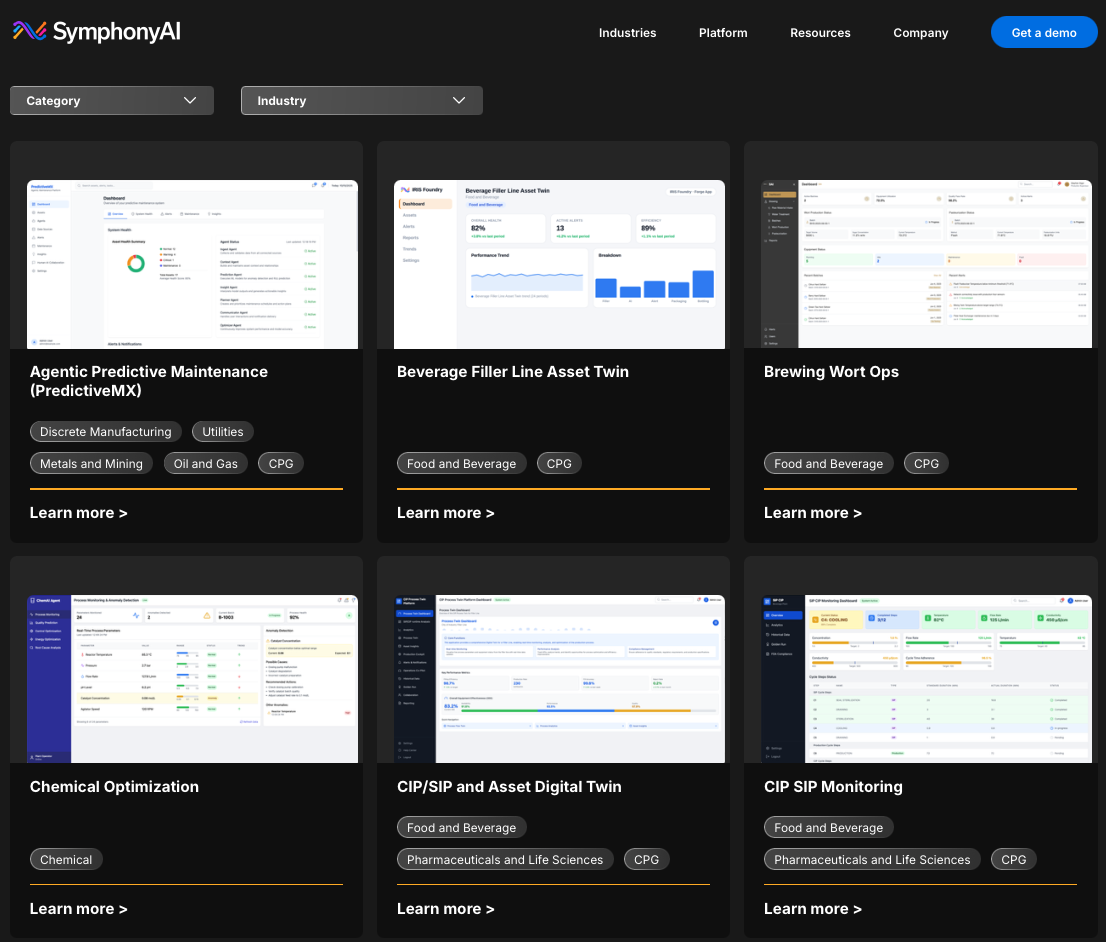
Oil and gas, metals, mining, and cement, pharmaceuticals, CPG, and discrete manufacturing. Filter the Industrial AI Solutions library by your industry to see the apps and agents already built for it.
Browse apps by industryGo deeper on predictive maintenance
Customer results, analyst recognition, and platform detail for teams building a predictive maintenance program.
One platform: IRIS Foundry, Forge, and Flows
Predictive Asset Intelligence runs on one unified data foundation, one way to build new AI applications, and one layer of agentic execution, built to work together across your plant.

The industrial DataOps platform that unifies DCS, LIMS, historians, MES, and ERP data into one governed, AI-ready foundation.



Your equipment already shows what fails next
Talk to an industrial reliability expert about the assets that cost you most when they stop, and see how fast IRIS Foundry turns their data into planned maintenance.
