Insights from industry leaders in Portugal
At SymphonyAI’s event “Advancing Anti-Financial Crime in Portugal” hosted at Fintech House Lisbon with Portugal Fintech, I had the pleasure of moderating a panel discussion titled: “Navigating the next chapter in financial crime prevention: Bridging risk, regulation and innovation with a multi-disciplinary dialogue.”
This conversation brought together brilliant minds from legal, banking, consulting, and technology backgrounds:
- João Caeiro, Head of AML/CFT and Sanctions, Banco BPI
- Duarte Santana Lopes, Partner, Morais Leitão
- Jorge Silva, Data and FSI Technology Specialist, Microsoft
- João Sequeira, Partner, Financial Services, EY
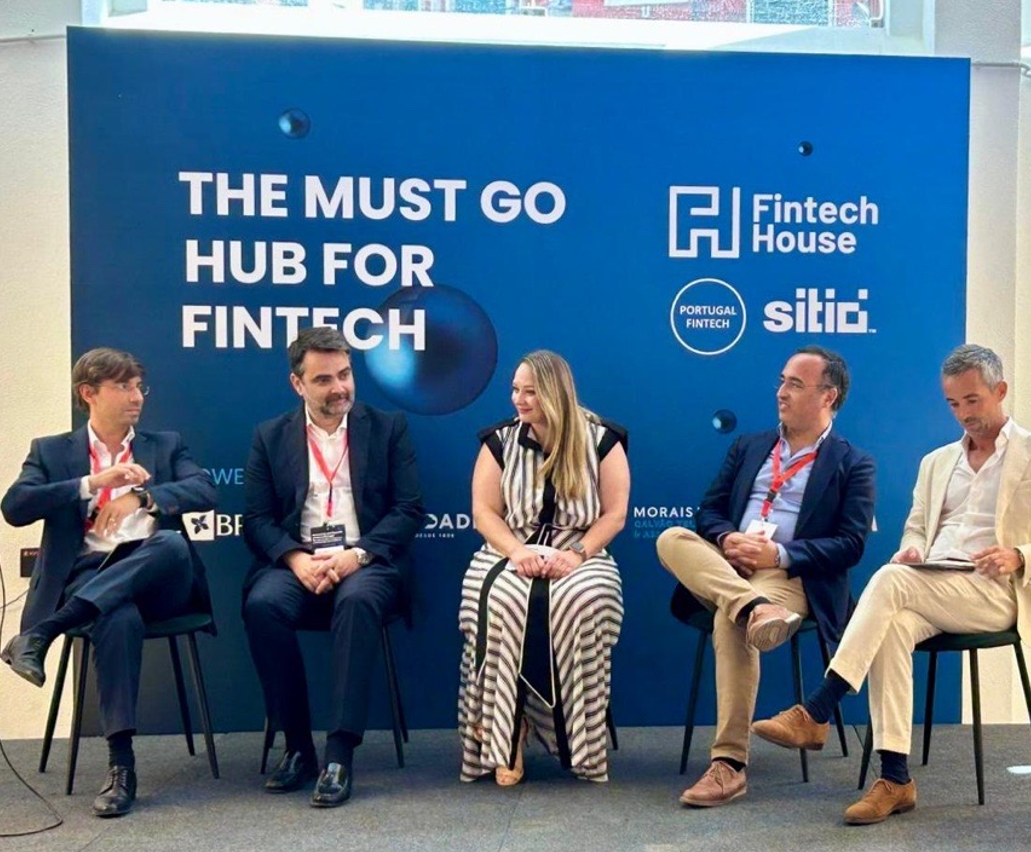
Together, we explored how financial institutions can adapt to a rapidly evolving landscape marked by emerging risks, shifting regulatory demands, and breakthrough innovations in AI and compliance technology.
The changing nature of Risk in real time
One central theme was the transition from traditional, periodic risk assessments to real-time, dynamic monitoring. João Sequeira of EY emphasized that “regulators and clients alike now expect institutions to respond in real time. The old model of annual or even quarterly reviews is no longer sufficient.”
João Caeiro from Banco BPI echoed this sentiment, stressing that “the ability to detect threats as they happen, especially fraud and identity theft, is becoming business-critical. Banks need to act instantly to stop funds from leaving or entering fraudulent accounts.”
Jorge Silva of Microsoft highlighted the role of AI in achieving this shift: “AI can analyse vast volumes of data at speed, providing actionable insights for compliance teams. From fraud detection to transaction monitoring, we’re moving toward a future where decisions are data-driven and immediate.”
Fraud, identity theft, and impersonation: The new headaches
The panel also discussed the alarming rise in digital fraud and impersonation attacks.
“We’re seeing impersonation not just through deepfakes but across everyday channels like WhatsApp,” said João Sequeira. “It’s critical that banks build better controls to distinguish genuine customers from true threats.”
João Caeiro brought the issue closer to home: “Fraud is the next big headache for banks. Not only are our customers becoming victims, but sometimes their accounts are being used as “mule accounts” where legitimate customers unwittingly allow their accounts to be used for money laundering are fast becoming the next big battleground for banks. The ability to react quickly is essential, and that only comes with real-time capabilities.”
AI: tool and threat
Duarte Santana Lopes offered a legal and philosophical lens, stating: “AI is a double-edged sword. It helps prevent financial crime but also enables new forms of it. Criminals are exploiting the same technologies we use for defence.”
He continued, “It’s a race between innovation in compliance and innovation in criminality. Financial institutions must invest smartly in controls and technology to stay ahead.”
Is regulation keeping up?
The panel agreed that regulation alone is not enough to keep pace with emerging threats.
“We need more collaboration between regulators and financial institutions to create frameworks that are practical and adaptable,” said João Sequeira.
Duarte Santana Lopes added: “We don’t need more laws. We need better tools, smarter compliance programs, and more active partnerships between regulators and the regulated.”
The power of public-private partnerships
There was consensus on the need for closer collaboration between regulators, financial institutions, and technology providers.
“In Portugal, public-private partnerships are still underdeveloped,” said João Caeiro. “To tackle fraud effectively, all players — banks, telcos, marketplaces, regulators — need to be aligned.”
Outside of Portugal, such as in the UK, closer alignment in tech and AI is happening. Fo r example, the UK’s Financial Condict Authority (FCA) AI Labs offers collaboration opportunities via AI sandboxes to pair regulators and financial institutions to develop solutions in a low-risk environment: “Firms can apply to use new the AI Supercharged Sandbox now through the FCA’s website to incubate new ideas to further develop technologies to address market challenges. These kinds of sandboxes are where the future gets built.” For business leaders, this highlights two imperatives: work closely with regulators to fast-track innovation, and prioritize data governance that supports AI readiness (think clean metadata, consistent formats, and scalable architecture).
Looking ahead: What comes next?
Panellists were asked to predict what innovation would shape the future in fincrime prevention:
- Duarte Santana Lopes called for more regulator-led training and knowledge-sharing. “Innovation isn’t just technology — it’s about evolving together, building shared understanding.”
- Jorge Silva highlighted foundational needs like data standardisation and metadata quality, but also highlighted the emerging disruption that quantum computing will bring on security and its impact in the regulation of security.
- João Caeiro said his wish is for “real-time KYC data across institutions” to prevent document fraud and reduce onboarding risk.
- João Sequeira spoke about the role of agentic AI and the shift toward near-total automation of compliance workflows, while stressing the importance of explainability and governance.
Final takeaways
The core of next-gen compliance
This panel underscored what I believe is the core of next-generation compliance: the need to move faster, work smarter, and collaborate better. The future of financial crime prevention lies at the intersection of innovation, agility, and shared responsibility.
Static risk reviews are obsolete
Panellists unanimously agreed: annual or even quarterly customer risk reviews are outdated. With fraud patterns now evolving by the hour, reactive models simply cannot compete.
Real-time monitoring is critical
Instead, financial institutions need continuous, real-time monitoring that is dynamic rather than static — to ingest and correlate transaction data, customer behavior, threat intelligence, and geographic movements — all at once.
Fraud detection without sacrificing experience
While faster fraud detection is essential, the customer experience still matters. Repeatedly blocking legitimate transactions damages trust, disrupts commerce, and burdens customer support teams.
AI must be explainable and accountable
This balance between accuracy and transparency is why AI systems must be built with explainability and human-in-the-loop capabilities.
Agentic AI is the next frontier
Looking to the future, the panelists pointed to emerging innovations like agentic AI – systems capable of independently executing operational tasks from start to finish. For banks, this could mean automated transaction screening, fraud escalation workflows, and compliance audits without human involvement.
AI that acts, not just alerts
While this level of autonomy will take time (and thoughtful oversight), it represents the next frontier of financial innovation — a future where AI doesn’t just alert, but acts on behalf of the business.
The call to evolve now
In a fast-moving financial landscape fraught with digital fraud and evolving regulations, one thing is clear: traditional compliance and fraud detection systems are no longer enough. Today’s banks and financial institutions must operate in real-time, leverage AI at scale, and build resilient models that adapt to ever-changing threats.
Continuing the journey together
I’m grateful to our outstanding panelists for sharing their insights and everyone who joined us in Lisbon. Let’s continue to push the boundaries of what’s possible in compliance excellence.